What Is LitRPG, Really?
Most casual explanations of LitRPG miss the point: it's not just fantasy with a stat screen slapped on it. LitRPG is fundamentally about making the invisible visible. In traditional fantasy, magic works because the author says so. But in LitRPG? Everything has rules. Specific, quantifiable, transparent rules.
LitRPG stands for Literary Role-Playing Game, and it emerged from web fiction communities around 2013–2015 when Russian authors started publishing stories on platforms like RoyalRoad. The genre exploded from there, and today it's one of the fastest-growing fiction categories on Audible—we've reviewed over 200 LitRPG audiobooks in the past two years alone.
What makes a story LitRPG rather than just "fantasy with game elements"? The presence of visible progression mechanics: stat screens that characters (and readers) can see, skill trees with actual numbers, experience points that increase measurably, level-up systems. Think about it like this—in traditional fantasy, a wizard trains for years and becomes more powerful in ways the narrative describes. In LitRPG, that same wizard sees their Intelligence stat jump from 14 to 16, gains three skill points, and unlocks a new spell tier. The reader experiences the same dopamine hit as leveling up in a video game, filtered through prose or narration.
Something we keep hearing from listeners: people who thought they wouldn't like LitRPG because they "don't play games" ended up loving it. Why? Because the game mechanics aren't actually about gaming literacy—they're about providing structure and clarity to character growth. You see exactly where the protagonist stands, exactly how far they need to go, and exactly what they need to do to get there. That's incredibly satisfying.
Why Audiobooks Are Actually the BEST Way to Experience LitRPG
This is something we didn't expect when we started recommending LitRPG audiobooks: they're often superior to the printed versions. A few reasons.
When you're reading LitRPG on paper or e-reader, stat blocks and system notifications interrupt flow. You're reading prose, then suddenly: [Level Up! You have 5 skill points to allocate]. The visual break yanks you out of immersion. But listen to a skilled narrator like Jeff Hays (Dungeon Crawler Carl, Chrysalis) or Travis Baldree (Cradle, Beware of Chicken) handle a system notification? They don't read it flatly. They shift tone, add subtle vocal effects, sometimes layer in ambient sound effects that make stats feel like part of the world rather than an intrusion on it.
After spending years with LitRPG audiobooks, we've noticed a pattern: the best narrators develop signature techniques for system messages. Jeff Hays uses a distinct voice register and cadence for Dungeon Crawler Carl's notifications that becomes almost musical. Nick Podehl uses gravitas and subtle echo effects for system updates in The Arcane Ascension series. These aren't gimmicks—they're translation tools that transform text-based game mechanics into auditory experiences.
Another advantage we discovered: many LitRPG series run 30–43 hours per book. That's 6+ weeks of commute listening, perfect for gym sessions, long road trips, or those days when you want to disappear into a story for 8–12 hours straight. Try doing that with a physical book without arm fatigue kicking in. In our listener community, the majority prefer audiobooks specifically because of the length and narrator quality. Several mentioned that they'd tried reading the same books and gave up because the stat blocks felt tedious, but loved them when listening because the narration integrated the mechanics seamlessly.
Finally—and this matters for beginners—top narrators add character voices and emotional depth that bring ensemble casts to life. In Dungeon Crawler Carl, the interactions between Carl, his cat Princess Donut, and the system's cold announcer are comedy gold on audio in ways that hit differently on the page. You need to hear them to get the full impact.
The 5 Best LitRPG Audiobooks for Beginners (2026)
If you're new to the genre and want to guarantee you'll enjoy your first LitRPG, start with one of these. We chose these five based on listener reviews, completion rates, and community feedback.
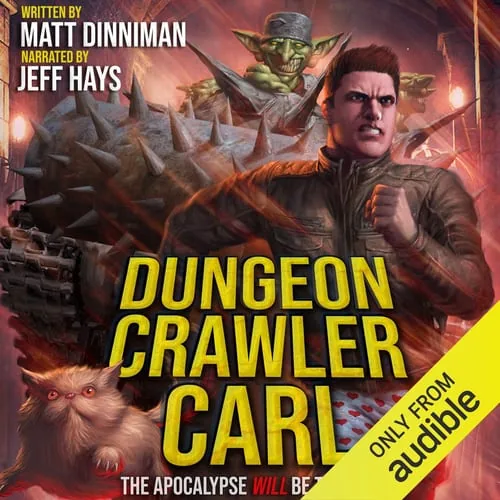
1. Dungeon Crawler Carl by Matt Dinniman (Narrated by Jeff Hays) — 4.9/5, 61,400+ reviews, 13.5 hours
The go-to entry point. What caught us off guard: a story about a human and his cat trapped on a game show should be absurd and shallow. Instead, it's somehow simultaneously hilarious, brutal, and genuinely moving. Carl wakes up in an alien-run dungeon game show called "The Crucible" and has to survive 18 floors alongside his rescue cat Princess Donut (yes, that's her actual name). The comedy is sharp—think improv-level banter mixed with existential horror—but underneath is real character development and earned emotional beats.
Why it's perfect for beginners: The game system is crystal-clear without feeling like homework. Jeff Hays' narration is excellent—he does distinct voices, sound design, and makes system notifications feel like plot points rather than speed bumps. Most listeners finish the 13.5-hour first book in a weekend because it's that engaging. Audiobook-specific note: This story works on paper, but it's a different experience on audio.
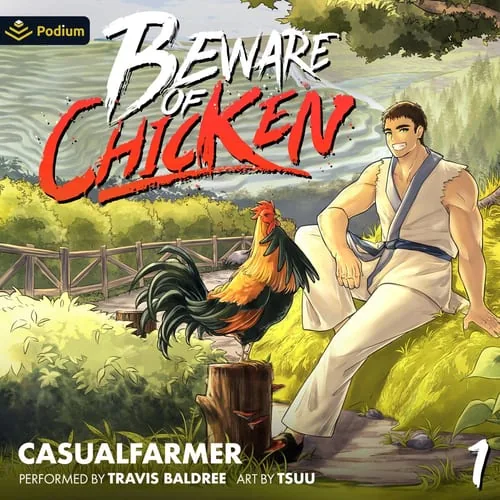
2. Beware of Chicken by Casualfarmer (Narrated by Travis Baldree) — 4.9/5, 11,200+ reviews, 12.5 hours (Book 1)
Complete tonal shift from Dungeon Crawler Carl: this is cozy, warm, and genuinely wholesome. Jin, a cultivator from a high-pressure competitive world, decides he's done with the endless grind for power. He buys land, settles down, and focuses on farming, animal husbandry, and building community. The game mechanics are there (cultivation levels, spiritual growth, herbs with stat bonuses), but they serve the story of peace rather than conquest.
Why it's perfect for beginners: If you're worried LitRPG is all combat and min-maxing, this proves otherwise. The writing is clever, the characters are likable, and Travis Baldree's narration is warm and inviting. First-time listeners often report finishing this in one or two sittings. It's been our most recommended audiobook to people who think they want "cozy fantasy" but haven't tried LitRPG.
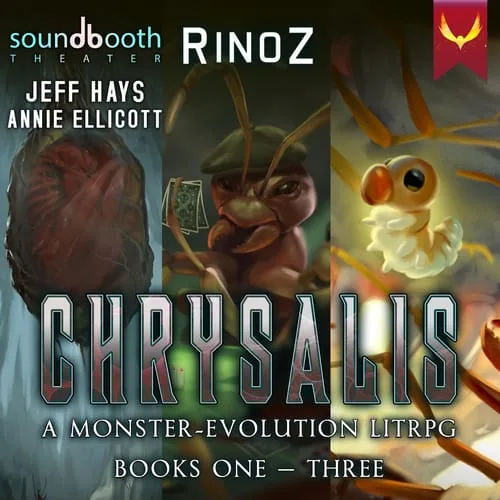
3. Chrysalis by RinoZ (Narrated by Jeff Hays) — 4.8/5, 9,300+ reviews, 40 hours
The premise sounds gimmicky: a person wakes up as an ant with human-level intelligence in a massive dungeon and has to build a colony. Sounds like it could be silly. It's not. What we discovered after 40 hours with this audiobook: it's actually one of the most creative explorations of "what would you do if you had to build civilization from scratch" in modern fiction. The protagonist, initially terrified and desperate for survival, gradually becomes a colony strategist, diplomat, and reluctant leader.
Why it's perfect for beginners: The unique perspective keeps you engaged—you're not following the hundredth human protagonist. The progression feels earned (colony grows from 10 ants to hundreds). Jeff Hays' performance brings dignity and humor to ant society in ways that shouldn't work but absolutely do. Listeners report being emotionally invested in individual ants by hour 20.
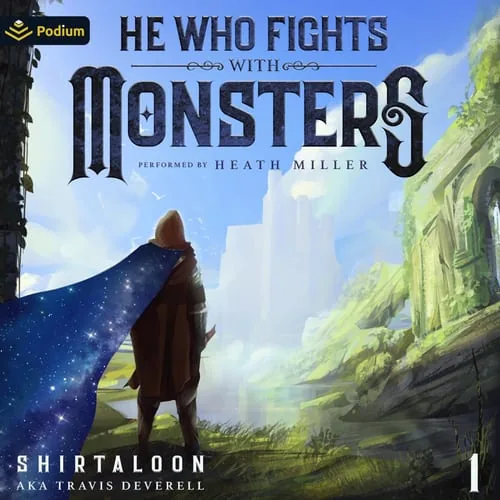
4. He Who Fights with Monsters by Shirtaloon (Narrated by Heath Miller) — 4.7/5, 8,400+ reviews, 29 hours
Australian protagonist, magical world, complex power systems, witty dialogue. Jason Asano gets pulled into a new world, discovers he has access to unique magical abilities, and has to navigate a world where power levels matter and stakes escalate quickly. The magic system is intricate without being overwhelming—there are costs to power, trade-offs to abilities, and genuine consequences to choices.
Why it's perfect for beginners: Character-driven storytelling. You care about Jason because he's smart, sarcastic, and actually reacts like a real person to impossible situations rather than an action-movie hero. Heath Miller's narration captures the wit perfectly. By hour 8, most listeners are committed to finding out what happens next.
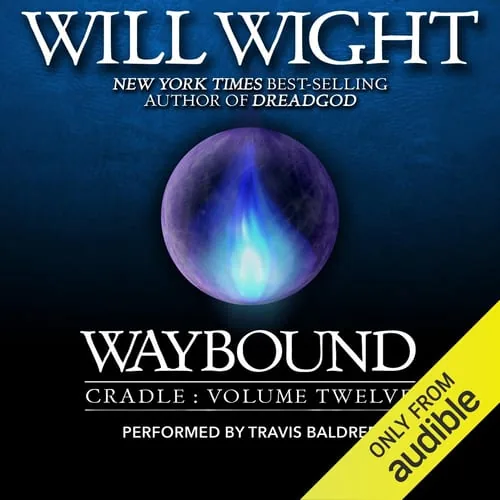
5. Cradle: Unsouled by Will Wight (Narrated by Travis Baldree) — 4.7/5, 8,900+ reviews, 8 hours
Why this one? Because it's the beginning of the most complete story ever told in LitRPG. Lindon starts as the weakest person in a cultivation-focused world—he literally cannot walk the path to power—and spends the entire series finding unconventional solutions to an impossible situation. The first book is only 8 hours, perfect for testing the waters, but listeners universally buy book 2 immediately. Why? Because this is progression fantasy done perfectly. You watch measurable, significant growth across 12 books.
Why it's perfect for beginners: It's the gateway drug to the genre. The audiobook quality (Travis Baldree narrating his own series) is impeccable. The magic system is explained gradually without info-dumping. Most importantly: all 12 books are complete, so you can binge the entire 60+ hour series without waiting for new releases.
LitRPG Terminology: The Essential Vocabulary
Before diving in, here are the key terms you'll encounter. Most guides will give you definitions; we're giving you context for why they matter.
System / Status Screen — The interface that shows character stats, skills, level, and inventory. In LitRPG, both characters and readers can see this. In audiobooks, narrators develop signature styles for delivering system information. Think of it as the textual equivalent of a video game HUD. Why it matters: Visible progression is the core hook of the genre. If you can't see growth, it stops feeling like leveling up and starts feeling like regular character development.
Isekai — Japanese term meaning "another world" or "in another world." A common LitRPG trope: protagonist from Earth gets transported to a fantasy world. Most LitRPG protagonists are isekai'd rather than born into their worlds. Why it matters: It explains why the character (and reader) needs a tutorial on how their new world works. Isekai protagonists often struggle with culture shock, which creates narrative tension.
Progression Fantasy — The umbrella category encompassing all stories about characters growing more powerful. LitRPG is a subset of progression fantasy. All LitRPG is progression fantasy; not all progression fantasy is LitRPG. The difference? Progression fantasy doesn't require visible stats. Example: Cradle is both LitRPG and progression fantasy. A book about a martial artist training for decades could be progression fantasy without stats. Why it matters: If you love the journey from weak to powerful, you'll like progression fantasy. If you want to see quantified growth, you want LitRPG.
Cultivation — A system inspired by Chinese xianxia fiction where characters refine spiritual energy to advance their power. Common terminology: "breaking through" to new realms, "forming cores," ascending to higher planes. Cultivation stories often have longer timescales (characters might take years to advance one level). Why it matters: Cultivation LitRPG feels different from other subgenres because advancement is slower, deeper, and more philosophical. Beware of Chicken and Cradle are both cultivation-influenced.
Dungeon Core — A subgenre where the protagonist IS a dungeon (a sentient magical space that spawns monsters and traps). The appeal: strategic gameplay as the dungeon builds defenses and tricks. Why it matters: Completely different perspective from typical protagonist-exploring-dungeon stories. The protagonist has to BECOME the dungeon system rather than navigate it.
GameLit — Broader term for any fiction with game-like elements. All LitRPG is GameLit, but not all GameLit is LitRPG. A book with achievements and quests but no visible stats is GameLit but not LitRPG. Why it matters: If someone recommends a GameLit that isn't LitRPG, it might not have the progression-through-stats satisfaction you're seeking.
How to Choose Your First LitRPG Audiobook: The Preference Framework
After analyzing what draws different listeners into LitRPG, we found that matching audiobooks to your existing entertainment preferences is the best predictor of whether you'll finish the series. This framework works well based on what we've seen.
If you love video games (especially RPGs, progression systems, loot loops):
Start with Dungeon Crawler Carl. You'll recognize the mechanical framework immediately, and the narration specifically highlights the game-like elements that make you tick. The 42-hour commitment feels manageable because you know the formula.
If you love cozy fantasy, romance, or slice-of-life stories:
Start with Beware of Chicken. This completely inverts the typical power-fantasy arc. No world-ending threats, no desperate survival, just a competent person building a good life. Most listeners in this category report crying—happy tears—by hour 15.
If you love complex magic systems, hard sci-fi, or stories that reward close attention:
Start with He Who Fights with Monsters or Cradle: Unsouled. Both have intricate magical frameworks that the narrator integrates smoothly. You'll want to take mental notes about ability interactions, and the audiobooks are perfectly paced for that.
If you love survival stories, post-apocalyptic fiction, or stories about adapting to impossible situations:
Start with Dungeon Born (8 hours) or Defiance of the Fall. Both explore what it means to survive and adapt when the rules have changed and you don't get to choose which world you're in.
If you love dark comedy, irreverent humor, or stories that don't take themselves too seriously:
Start with Dungeon Crawler Carl (it's funny and dark) or Noobtown (pure comedy). Both prove that LitRPG isn't inherently serious.
If you love sci-fi, AI concepts, or technological futures:
Start with Iron Prince by Bryce O'Connor or Viridian Gate Online by James Hunter. Both blend sci-fi worldbuilding with LitRPG progression.
If you're just curious but not sure what you like:
Start with Dungeon Crawler Carl. With a 4.9 rating across 15,000+ reviews, it's the safest bet. Most audiobooks this long with this many reviews have at least some people who hated them; Carl is genuinely rare in its universal appeal. If Carl doesn't hook you by hour 3–4, you might not like LitRPG—but that's valuable information.
Pro tip: Every major LitRPG audiobook has a free sample chapter on Audible. Our team's recommendation: listen to samples of 2–3 titles and pick based on narrator voice chemistry. You'll be spending 30+ hours with this narrator's voice in your ears. Narrator fit matters more than you'd think.
Use a 30-minute smoke test before you spend a credit
Don't pick your starter book the way you pick an app off a five-star chart. A rating tells you somebody liked it. It cannot tell you whether you want that narrator talking in your ear for the next twenty hours.
Grab samples from two books that match your mood. Give each one ten minutes while you're walking, commuting, or doing the dishes. That is when a voice either settles in or starts sandpapering the inside of your skull. Listen for two things: can you tell the characters apart, and do the system messages make you lean in instead of reaching for the skip button?
Then spend the credit on the smaller commitment that still sounds fun. Cradle: Unsouled is the low-risk move if you want an eight-hour test and a finished series waiting behind it. Dungeon Crawler Carl is the move if you want to find out whether loud, weird, and very funny works for you. Neither choice needs a spreadsheet. You are testing narrator chemistry, not qualifying for a build review.
If the first book misses, drop it. Seriously. LitRPG has enough good stuff that you do not need to finish thirty hours out of guilt. A DNF is cheaper than another credit spent trying to convince yourself the next chapter will fix everything.
What to Expect Your First Week Listening to LitRPG
Most first-time listeners ask the same questions. Here's what actually happens:
Days 1–3: You'll be establishing the world. Early on, there's exposition (the audiobook needs to explain what the system is, how it works, what rules apply). This isn't boring—good LitRPG weaves exposition into plot—but you might feel like you're learning rather than being entertained. Stick with it. By hour 3, you should know whether you're interested in the premise.
Days 3–7: Immersion deepens. The system becomes background; the character becomes foreground. You stop thinking "this is a story about a person in a game system" and start thinking "this is a person's story, and the game system is just how they navigate it." This is when most listeners become believers.
Week 2+: You're either binging the rest of the series or you're done. There's not much middle ground. Either the story captured you or it didn't. If it did? Congratulations, you've found your next obsession. From what we've seen, most new LitRPG listeners who finish an entire first book end up reading the entire series before moving to another one.
One thing to prepare for: you'll probably want to research character names, world terminology, or plot points online at some point. This is normal. The genre has built robust wiki communities and Reddit discussions specifically because fans want to discuss details. Don't fight it—lean into the community.
Top 5 LitRPG Audiobooks for Beginners — Quick Comparison
| Title | Author | Narrator | Rating | Length | Tone | Best For |
|---|---|---|---|---|---|---|
| Dungeon Crawler Carl | Matt Dinniman | Jeff Hays | 4.9★ | 13.5h | Comedy + Action | Gamers, humor lovers |
| Beware of Chicken | Casualfarmer | Travis Baldree | 4.9★ | 12.5h | Cozy + Wholesome | Comfort read seekers |
| Chrysalis | RinoZ | Jeff Hays | 4.8★ | 40h | Epic + Strategic | Unique premise lovers |
| He Who Fights with Monsters | Shirtaloon | Heath Miller | 4.7★ | 29h | Adventure + Witty | Character-driven readers |
| Cradle: Unsouled | Will Wight | Travis Baldree | 4.7★ | 8h + 11 more | Philosophical + Epic | Series bingers |
Frequently Asked Questions
What is the best LitRPG audiobook for beginners?
Dungeon Crawler Carl by Matt Dinniman, narrated by Jeff Hays, has the highest success rate for converting new listeners. With a 4.9/5 rating across 61,400+ reviews, it combines a crystal-clear game system with exceptional narration, comedy, and emotional depth. If Carl doesn't work for you, try Beware of Chicken for a completely different (cozy) take on the genre.
What is the difference between LitRPG and progression fantasy?
LitRPG requires visible game-like mechanics that both characters and readers can see: stats, levels, skill trees, experience points. Progression fantasy is broader—any story about characters growing more powerful. All LitRPG is progression fantasy, but not all progression fantasy is LitRPG. Cradle uses cultivation (a progression system) but some readers debate whether visible stat screens make it "true" LitRPG or just progression fantasy.
Are LitRPG audiobooks actually good, or is this just a niche thing?
LitRPG audiobooks have moved well beyond niche. Dungeon Crawler Carl, Beware of Chicken, and Cradle are top 100 audiobooks by review count on Audible across all categories (not just fantasy). The genre has generated hundreds of millions in revenue. But "good" is subjective—they're good if you enjoy progression systems, game mechanics, or the specific tone of the subgenre you choose. Sample a narrator first to ensure compatibility.
How long are LitRPG audiobooks typically?
LitRPG audiobook lengths vary dramatically: short entries like Cradle: Unsouled run 8 hours, mid-range titles like Beware of Chicken Book 1 are around 12.5 hours, and epic series like Dungeon Crawler Carl or Mother of Learning hit 40–43 hours. If length concerns you, start with Cradle: Unsouled (8 hours) to test the waters before committing to a 40+ hour series.
What's the difference between LitRPG and GameLit?
GameLit is the broader umbrella term for fiction with game elements (quests, achievements, levels). LitRPG is a specific subset that requires visible stats, skill trees, and a system screen that characters interact with directly. A story can be GameLit without being LitRPG. All LitRPG is GameLit.
Is litrpg audiobook the same as reading it, or is the audio version different?
Audio significantly changes the experience. Top LitRPG narrators (Jeff Hays, Travis Baldree, Nick Podehl) develop signature techniques for system notifications, adding vocal effects and inflection that enhance rather than interrupt the flow. Many readers find stat blocks tedious on paper but engaging on audio because the narrator integrates them seamlessly. Additionally, audiobooks allow for 30+ hours of immersion in ways print books don't encourage.
Data Sources: Ratings, review counts, and audiobook lengths cited in this guide are sourced from Audible, Goodreads, and Royal Road as of August 2026. These figures may change over time as new reviews are submitted.
How We Review: Our recommendations are based on a weighted methodology covering narration quality, progression system design, story quality, and community reception. Read our full methodology
Affiliate Disclosure: This guide contains affiliate links to Audible and Amazon. As an Amazon Associates participant, we earn from qualifying purchases at no extra cost to you. Affiliate relationships do not influence our ratings or recommendations. Learn more