Best LitRPG Audiobooks, Ranked (2026)
There are 64 Book 1s here, ranked by Audible rating with the number of ratings factored in, so a 4.9 from a few hundred ratings doesn't leapfrog a 4.8 from tens of thousands. Rankings only go so far, though. A 4.8-star audiobook can still be a terrible fit if you cannot stand the narrator or a 40-hour opener.
I put the useful stuff beside each title: narrator, runtime, and whether the series actually ends. Pick a sample, then bail early if it does not click. Life is too short to hate-listen through a 30-hour setup.
Want a fast answer? Try Dungeon Crawler Carl for dungeon-crawl chaos, Cradle for a finished progression run, or Beware of Chicken when you want cultivation with a slower pulse.
In the mood for an older release? See the best LitRPG audiobooks of 2020.
Page updated: October 12, 2026
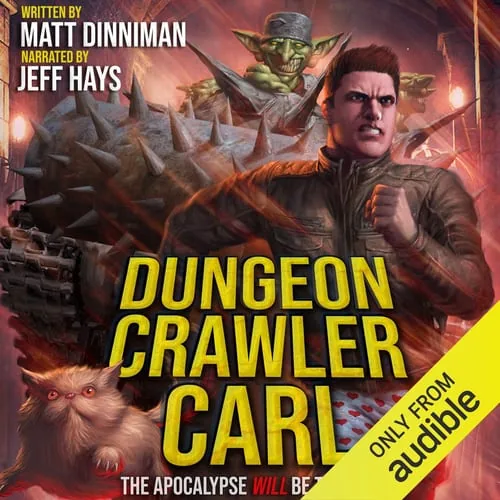
Dungeon Crawler Carl
by Matt Dinniman
Jeff Hays
4.8 ⭐
13.5h
71.5K
Carl is outside in boxer shorts chasing his ex's prize-winning cat when the aliens demolish every building on Earth and invite the survivors into an eighteen-floor dungeon that doubles as the galaxy's biggest reality show. The cat — Princess Donut — gains sapience, a crown, and instant top billing. This is the best audiobook in our database, and it isn't close. Dinniman stacks absurd comedy on top of genuine rage on top of real grief, and somehow the achievement messages from a deranged AI land as both jokes and worldbuilding. Donut is the greatest sidekick in the genre, comic relief and emotional anchor in the same furry package. The only recurring knock: the video-game framing can wear on people somewhere across eight books. Jeff Hays delivers the definitive performance of modern LitRPG — his Donut voice alone has spawned a thousand memes, and print readers are legitimately missing part of the text. 71.5K ratings. 4.8. Start here if you start anywhere.
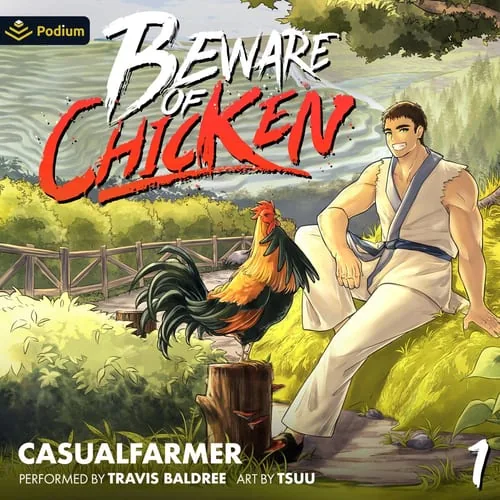
Beware of Chicken
by Casualfarmer
Travis Baldree
4.8 ⭐
12.6h
9.1K
A transmigrator wakes up in the body of Jin Rou, bullied outer disciple of a cultivation sect, considers the genre-standard revenge arc — and quits instead, fleeing to farm in the Azure Hills, the weakest spiritual region on the map. The joke is that he can't stop cultivating by accident: his qi seeps into the land, and suddenly his rooster Bi De is having midnight epiphanies under the moon and out-cultivating veteran sect elders. Beware of Chicken is the cozy xianxia subversion — 16 million Royal Road views before it ever hit audio, then Audible's Best of Fantasy 2022 once it did. The rotating POVs between Jin and his increasingly enlightened farm animals are the secret weapon; Bi De's chapters are the best thing in the book. If you need plot momentum, the meandering will test you. Stakes here are measured in harvests. Baldree's comic timing is trademark-grade. 9.1K ratings at 4.8, and hands-down the most relaxing thing on the site.

Iron Prince
by Bryce O'Connor & Luke Chmilenko
Luke Daniels
4.8 ⭐
34h
7.7K
Rei Ward was born with a degenerative genetic disease in a future where combat sport rules everything — brittle bones in a world that worships fighters. Then his CAD, the neural combat device every citizen receives, does something no CAD is supposed to do: it evolves. Shido grows with him, adapts to him, and slowly turns the weakest recruit at the Galens Institute into the academy's most dangerous variable. Iron Prince is the best pure underdog hype in the genre — the Cradle comparisons get thrown around constantly and are mostly earned — and the sparring-ladder structure means you're never far from a duel with real stakes. It's also long-winded; even reviewers who love it admit you could cut a third of the 34 hours without losing plot, because O'Connor and Chmilenko describe everything. Luke Daniels' action delivery makes the tournament arcs absolutely cook. 7.7K ratings at 4.8. When book two hit my library, I cleared my weekend.
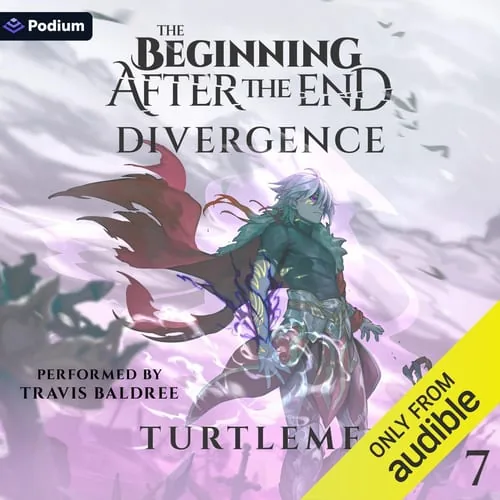
The Beginning After the End
by TurtleMe
Travis Baldree
4.8 ⭐
6h
6.9K
King Grey ruled his world through strength and died with nothing worth keeping. He had no bonds, no regrets, and barely a self. Reborn as Arthur Leywin on the continent of Dicathen, he gets the one thing power never bought him: a family worth protecting, and a childhood to do over with an adult's memories riding along. TBATE is a phenomenon — webnovel, Tapas comic, Crunchyroll anime, and twelve audiobooks all narrated by Baldree — and book one covers Arthur's early years: he develops a mana core decades ahead of schedule, bonds with the dragon Sylvie, and starts figuring out how to be a person this time. Real talk: the early books are anime-flavored wish fulfillment with juvenile prose and some jarring time-jumps, and the six-hour opener is more setup than payoff. The series grows into itself, and the fanbase crossing over from the comic is enormous for a reason. Baldree is crisp and enthusiastic throughout, and for a lot of listeners he's the reason to stick with it. 6.9K ratings at 4.8.
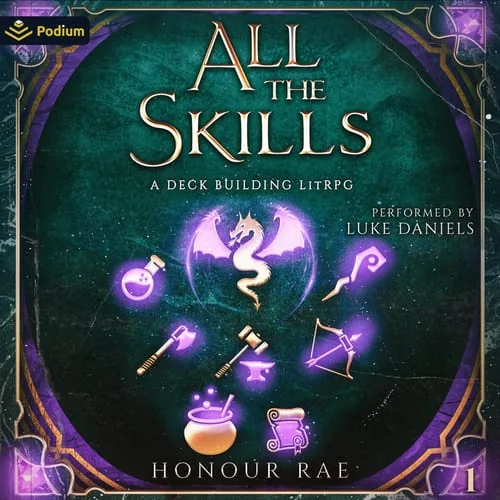
All the Skills
by Honour Rae
Luke Daniels
4.8 ⭐
13.5h
3.8K
Arthur is a poor kid in a border town when a dying caravan dragon hands him a Legendary card — Master of Skills, which lets him learn and copy any skill in the world — along with a warning: never let the baron find out. In a setting where your entire future is literally the cards you're dealt (magic here is a deck-building system), that's a lottery ticket with a death sentence printed on the back. The mid-book turn adds the series' best character: Brixaby, a parrot-sized Legendary dragon with the ego of a battleship, who bonds with Arthur inside a dragon-rider hive. The card mechanics are simple and satisfying, and the tone stays cozy-adjacent. The whole thing goes down easy. The critique: the system props up stretches where the story itself is unspectacular, and the worldbuilding sections amble. Luke Daniels is a national treasure here — his Brixaby is pitch-perfect tiny-dragon arrogance. 4.8 from 3.8K ratings.
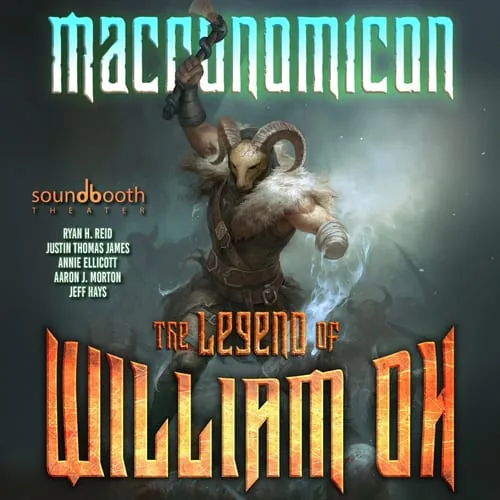
The Legend of William Oh
by Macronomicon
Ryan H. Reid & Full Cast
4.9 ⭐
10.5h
568
William Oh is an orphan with one dream: climb the Tower at the center of the world and get strong enough to serve his deadbeat parents a knuckle sandwich. Petty? Deeply. That's the charm. The structural gimmick is what sold me: every chapter opens with a tall tale about Will — Paul Bunyan-style exaggerations of things that sort of happened — and his folk-legend reputation becomes an actual resource he can spend. Legend as a stat. Macronomicon (of Apocalypse: Generic System fame) writes wit-forward and clever, and the tall-tale openers keep landing right up to the finale. If you need your stakes played straight, the constant exaggeration will wear on you; the book knows exactly how seriously it wants to be taken, which is: not very. Soundbooth went full cast — Ryan H. Reid leading, with Annie Ellicott and Jeff Hays in the mix — and the sound design is icing on an already great production. Ten and a half hours, zero filler. 4.9 from 568 early ratings.
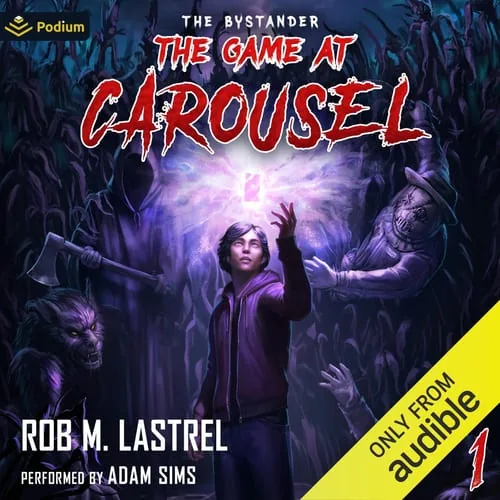
The Bystander
by Rob M. Lastrel
Adam Sims
4.9 ⭐
11.5h
270
Riley Lawrence and his college friends drive into Carousel, a town that casts visitors in living horror movies — everyone assigned an archetype with stats to match. Final Girl. Athlete. Eye Candy. Riley draws Film Buff, a support class that historically dies in act one. What saves him is the Red Wallpaper: hidden meta-text only he can read, showing the tropes in play, character statuses, and who's a player versus an NPC versus the thing hunting them. His survival strategy is genre literacy — exploiting the Oblivious Bystander trope means monsters can't touch him while he convincingly ignores them, which is both brilliant and hilariously tense in practice. Die on-script and you respawn; break the story and you're gone for good. It's the most creative mechanical premise the genre has produced in years. The trade-off: Riley's playstyle is inherently passive, and that limited agency carries into book two. Adam Sims reads it clean and lets the dread build. 4.9 from 270 ratings — the best-kept secret in our database.
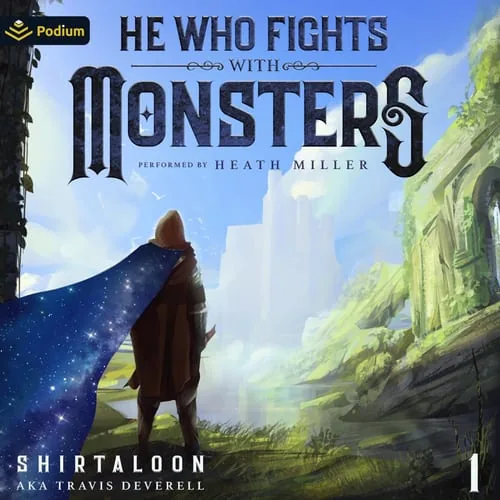
He Who Fights with Monsters
by Shirtaloon
Heath Miller
4.7 ⭐
29h
48.4K
Jason Asano wakes up naked in a hedge maze on another world, and within a day he's talking his way through a cannibal cult situation with the confidence of a man who's read enough isekai to think he understands the genre he's trapped in. HWFWM runs on essence magic — Jason's dark/blood/sin combo builds him into an affliction-stacking, shadow-hopping nightmare whose fights play completely differently from standard DPS builds. Around him: Rufus, Farrah, and Gary, a found family good enough to anchor thirteen books. Know what you're signing up for, though. Jason never stops talking. The banter is the draw and the dealbreaker — 48.4K ratings at 4.7 says most people land on draw, but the minority who find him exhausting aren't wrong either, and later books lean into his morality spirals. Heath Miller's narration is the tiebreaker: he gives Jason exactly the right level of snark and makes the whole Australian-guy-in-a-fantasy-world thing sing.
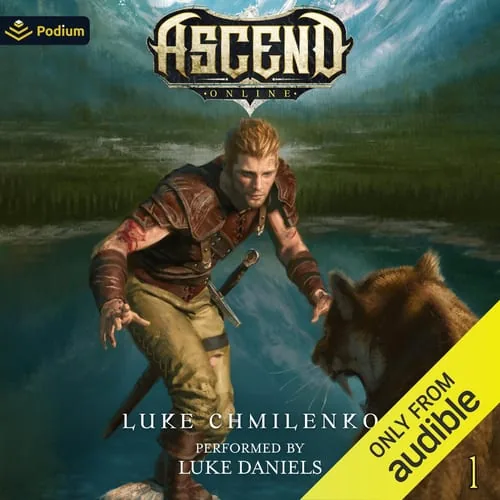
Ascend Online
by Luke Chmilenko
Luke Daniels
4.7 ⭐
17.9h
15.8K
Marcus logs into Ascend Online with his whole friend group and immediately gets separated, spawning as Lyrian in a remote village that happens to be mid-goblin-raid. Instead of speedrunning back to civilization, he stays — drives off the horde, then rebuilds the ruined settlement of Aldford into a real community. It's a VRMMO story where standing up a forge and recruiting villagers matters as much as clearing dungeons. The town-building loop is deeply satisfying, the ensemble cast pulls its weight, and build decisions feel like actual theorycrafting rather than author fiat. The catch: the prose repeats itself — same beats, same descriptions — and even five-star reviews admit the narration does some carrying. Luckily the narration is Luke Daniels, who hands every villager a distinct voice and makes twelve hours feel like eight. One of the friendliest entry points into VR LitRPG, and 4.7 across 15.8K ratings backs that up.
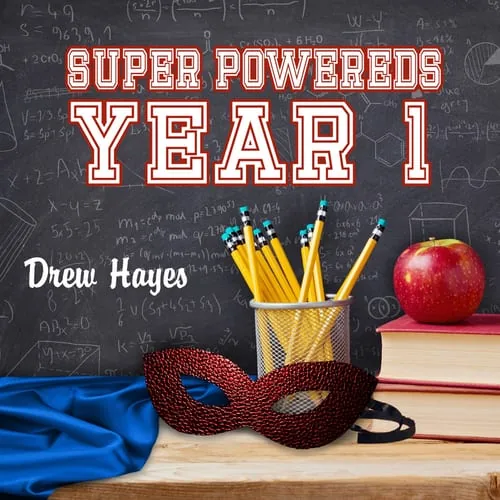
Super Powereds: Year 1
by Drew Hayes
Kyle McCarley
4.7 ⭐
26h
14.9K
Five freshmen enter Lander University's Hero Certification Program sharing one dangerous secret: they used to be Powereds — people whose abilities fire uncontrollably, the superhero world's untouchable caste — until an experimental procedure gave them control. Vince absorbs and redirects energy, Nick is a luck manipulator playing the fool, Mary hears thoughts, Hershel transforms into his indestructible alter ego Roy, and Alice flies. Drew Hayes writes found-family dorm dynamics better than almost anyone, and the long game is elite — throwaway lines from year one detonate three books later. It's a college story as much as a supers story, which means party arcs and relationship drama between HCP gauntlets; that pacing is the common gripe, along with Kyle McCarley's female voices drifting toward parody. Minor stuff against 26 hours that fly by. 14.9K ratings, 4.7 average, complete at four books, and the landing actually sticks. It's my comfort relisten, full stop.
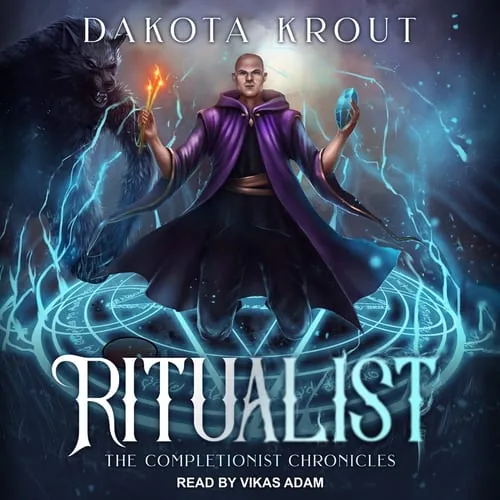
Ritualist
by Dakota Krout
Vikas Adam
4.7 ⭐
12h
14.2K
Joe dives into Eternium, a full-immersion game world, and unlocks the Ritualist — a hidden class so feared he has to practice it in secret or get burned at the metaphorical stake. The class is the hook: ritual magic scales with prep time and creativity instead of cooldowns, so Joe's wins come from out-planning the content. He's also a completionist (every quest, every skill, every secret), which makes this a series for players who 100% games on principle. Dakota Krout's signature is tone: relentlessly upbeat, clean, and absolutely stuffed with puns. That last part is a real filter. The dad jokes never stop, and whether that's a feature or a bug is the whole review. For me: feature, mostly. Vikas Adam, an AudioFile Golden Voice, brings big combat energy, with the recurring caveat that his female voices grate on some listeners. 14.2K ratings at 4.7, fourteen books of low-stress content.
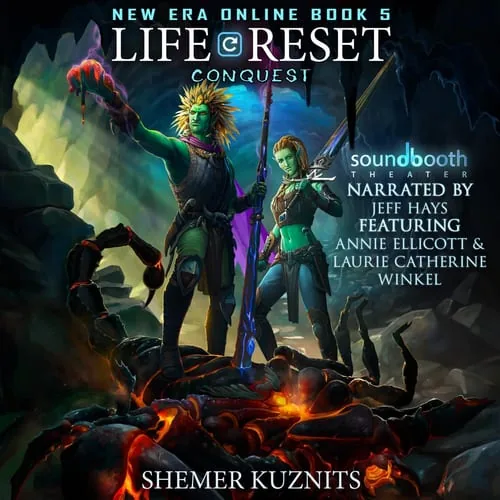
Life Reset
by Shemer Kuznits
Jeff Hays
4.7 ⭐
24.7h
12.6K
Oren is a top-ten player and guild leader in New Era Online when his own officers betray him — hitting him with an ultra-rare curse that locks him into the body of a level-1 goblin. He's cut off from his old contacts, and there's no way back to a human body. Life Reset is the revenge-rebuild fantasy done with total commitment: Oren starts from actual zero, founds the GreenPiece clan, and turns a goblin warren into a functioning monster nation through town-building, faction play, and pure spite. The settlement loop is the addiction here — this is one of the genre's best kingdom-builders, and book one alone runs nearly 25 hours. Cons: the mid-series bogs down in stat-crunch bookkeeping, and Kuznits lingers on Oren's suffering longer than some readers can stomach. Jeff Hays goes all-out — distinct voices for every goblin, monster, and player, with his own sound effects where it counts. Complete at six books. 12.6K ratings at 4.7.
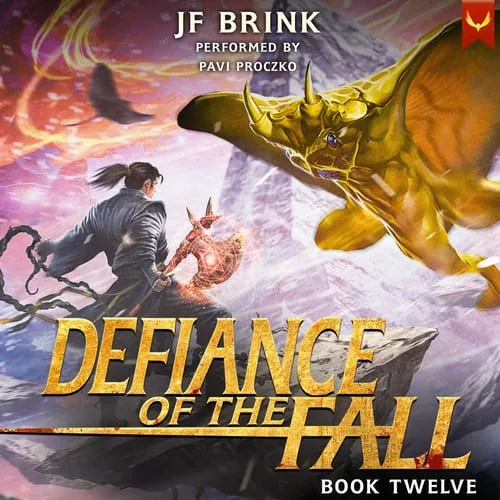
Defiance of the Fall
by TheFirstDefier
Pavi Proczko
4.7 ⭐
23.5h
11.3K
Zac Atwood is alone in a forest when the System integrates Earth into the multiverse — which means he misses the tutorial everyone else gets, misses class selection entirely, and spends the apocalypse's opening weeks killing demons with a hatchet and raw stats. That tutorial-skip is the series' masterstroke: Zac develops sideways, through Dao insights and brute-force pathing no properly classed person would attempt. DotF is the definitive LitRPG-cultivation hybrid, and it's huge — book one alone runs 23.5 hours, and the series is seventeen doorstoppers deep. Momentum is the selling point: power scaling that keeps escalating without going numb. The criticism writes itself, though: subsystems pile onto subsystems until the magic system needs its own wiki, and pacing sags after the early Earth arcs. Pavi Proczko deserves a medal — his fatigue-laced Zac and textured side characters keep the marathon listenable. 11.3K ratings at 4.7.
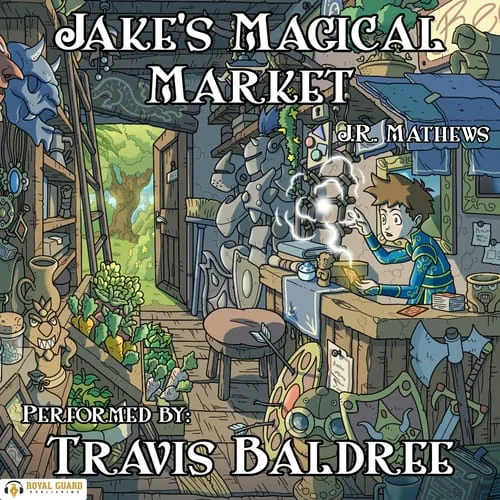
Jake's Magical Market
by J.R. Mathews
Travis Baldree
4.7 ⭐
20.5h
8.5K
Jake runs a corner market under his apartment when the gods shuffle Earth like a deck of cards — literally: the apocalypse System here is card-based, powers slot in like a TCG, and Jake's opening hand includes a Legendary time-freeze card. Early chapters are exactly the cozy shopkeeping-during-armageddon premise the title promises. Then the story molts: an apocalypse survival act, then full galactic scale with new systems and stakes, each act barely resembling the last. That shape-shifting is the point of contention — people who came for the magical market are vocal about the market disappearing, and Jake goes from underdog to extremely overpowered fast. I went in expecting a merchant sim and got a rocket; once I adjusted, I had a blast. Baldree's book-one read is his usual excellent self (heads up: the sequels switch to John Pirhalla, who does fine work). 8.5K ratings at 4.7 says the ride wins people over.
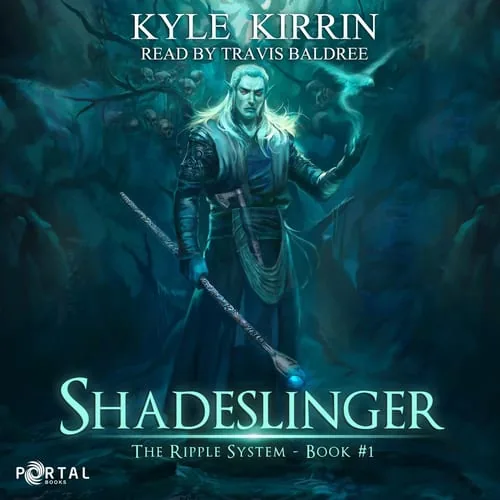
Shadeslinger
by Kyle Kirrin
Travis Baldree
4.7 ⭐
21.5h
8.4K
Ned Altimer is a corporate flameout who blows his savings on a three-day head start for Earthblood Online, planning to grind his way to the top of the leaderboards before the servers even open to the public. Instead he gets saddled with Frank: a ridiculously handsome talking axe who knows the game's deepest secrets and actively sabotages Ned's build choices, mostly because Frank hates mages. That dynamic carries the whole book. Ned wants to sling spells, Frank wants a melee murder machine, and the compromise — the shadow-hopping Shadeslinger class — turns out to be busted in the best possible way. The titular Ripple System hands out big stat jumps for world-first achievements, so everything has that launch-week race energy anyone who's ever no-lifed an MMO opening weekend will recognize instantly. And it's funny. Actually funny, not LitRPG-funny. Travis Baldree's dry delivery as Frank is worth the credit by itself; he turns decent jokes into great ones. The 21.5 hours sag a little in the mid-game, but 8.4K ratings holding a 4.7 average tells you most listeners didn't care. Easy pick if VR LitRPG is your lane.
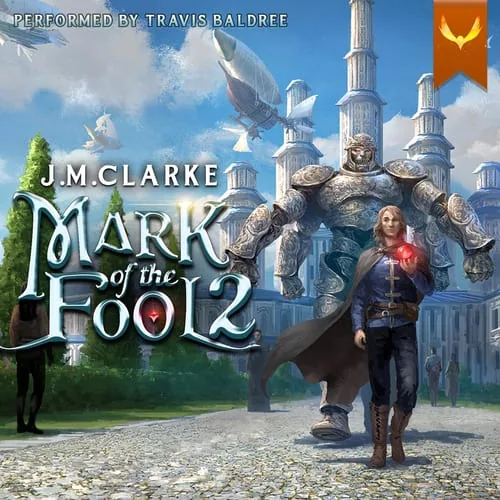
Mark of the Fool
by J.M. Clarke
Travis Baldree
4.7 ⭐
19h
7.3K
Alex Roth turns eighteen and gets Marked as the Fool — statistically the worst of his kingdom's five prophesied Heroes, the one who historically dies first fighting the Ravener. Alex looks at that precedent, says no thanks, and flees the country with his little sister Selina, his childhood friend Theresa, and her giant cerberus Brutus, enrolling at Generasi, the world's greatest wizard university. The Mark's design is the clever part: it sabotages his combat magic but turbo-charges mundane skill learning, so Alex progresses through workarounds — potions, golems, planning, and cheese strats no properly Marked Hero would ever need. Found-family warmth plus academy structure plus a ten-million-view Royal Road pedigree, and book one's pacing is about as good as the genre gets. Honest caveat: later volumes slow down and repeat, and Alex's lack of direct offense starts charming and gets frustrating. Baldree narrating a cozy academy series is a redundant sentence. 4.7 from 7.3K ratings — a top-five academy pick, easy.
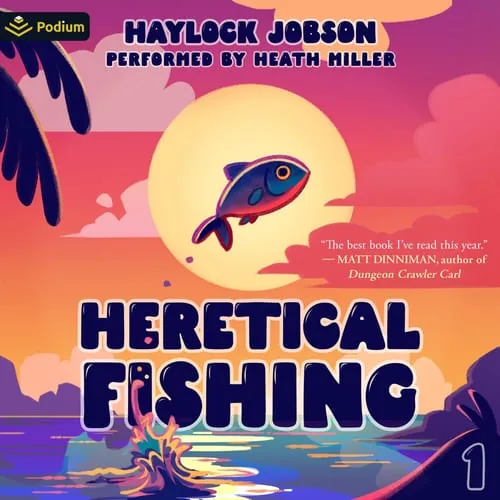
Heretical Fishing
by Haylock Jobson
Heath Miller
4.7 ⭐
24h
6.1K
Fischer burned out on success back on Earth; summoned to Kallis Realm — a world its gods abandoned, running on a degraded System — he takes one look at the power-progression rat race and opts out to go fishing. Which happens to be literal heresy, policed by actual cults. The rebellion of it is the joke, and the execution is the reason r/litrpg won't shut up about this series: fishing, cooking, and collecting accidentally overpowered animal companions, headlined by Sergeant Snips, a sentient crab who is the breakout character of cozy LitRPG, with Corporal Claws the otter close behind. Stretches go by where nothing happens, gloriously. The one critique with teeth: Fischer talks like a Jason Asano clone, and with Heath Miller narrating both series, the déjà vu is real. It doesn't stop Miller from knocking this out of the park — his laid-back register was built for exactly this. 6.1K ratings at 4.7, five books, and the genre's premier hammock listen.
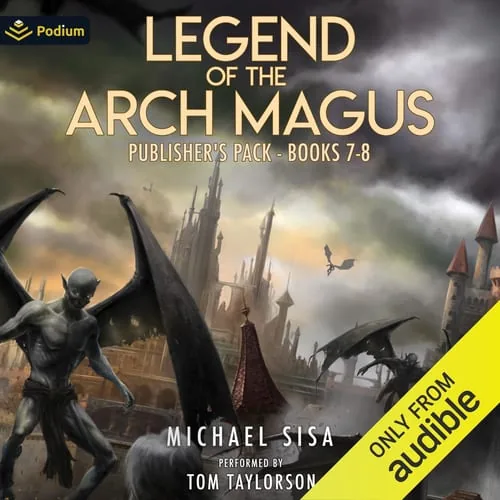
Legend of the Arch Magus
by Michael Sisa
Tom Taylorson
4.7 ⭐
10h
4.3K
A dying Arch Magus reincarnates into Lark, second son of a Duke, and promptly gets exiled to a backwater town nobody cares about. So he fixes it. That's the whole loop: past-life magic plus administrator brain applied to a medieval money pit, and it's weirdly addictive — competence fantasy in its purest form. I'll be straight with you: Lark barely has an inner life, the prose is rough in spots (English isn't the author's first language), and nothing here will surprise you. Doesn't matter. Fourteen books of watching one small territory snowball into a regional power scratches the same itch as a good city-builder save file. Tom Taylorson narrates, and the audiobooks come as two-book packs (the first runs about 13.5 hours), which makes them easy background-grind listens. A 4.7 from 4.3K listeners says the formula works, rough edges and all.
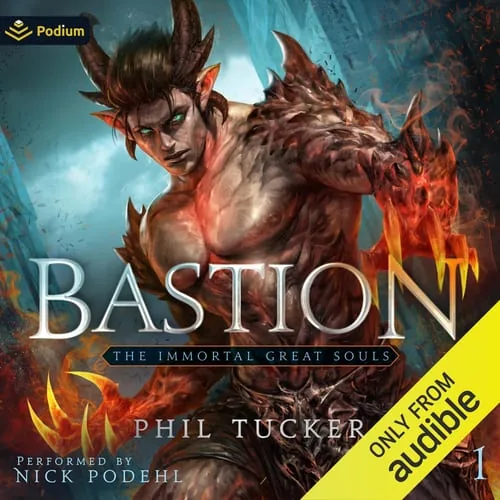
Bastion
by Phil Tucker
Nick Podehl
4.7 ⭐
38h
3.6K
Scorio wakes up face-down in Bastion with no memories, no status, and a reputation he can't remember earning — because in this ancient underworld city, Great Souls reincarnate over and over to hold the line against infernal invasion, and everyone seems to think past-Scorio was a monster. Condemned for crimes he can't recall, he starts from the literal bottom: pit labor, brutal trials, and a long climb toward the Academy while rivals like Imogen make everything personal. Phil Tucker writes progression with actual weight — power-ups cost something, and the worldbuilding unfurls at macro scale. It's binge bait; I lost a weekend to the back half. Fair notes: pacing sags for a few hours after the mid-book Imogen fight, and Scorio himself can be hard to root for early on. Podehl is fantastic throughout, which carries you through the slump. 38 hours, 4.7 from 3.6K ratings, four books deep and building toward something big.
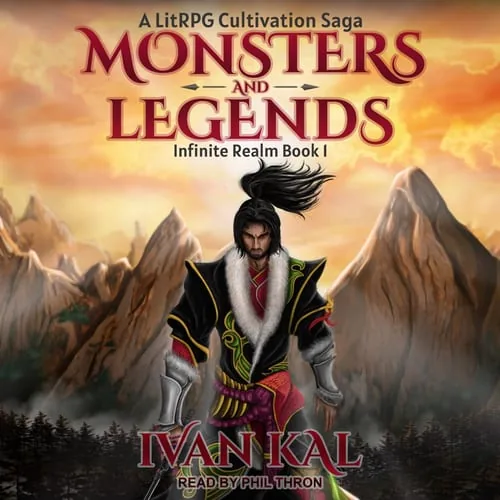
Monsters and Legends
by Ivan Kal
Phil Thron
4.7 ⭐
34.5h
2.1K
Zach and Ryun were best friends. Then the Framework hit Earth, Ryun destroyed the world, and Zach gathered humanity's last nine souls to kill him. Monsters and Legends opens after all of that, with both men ascended to the Infinite Realm and the story of their falling-out doled out in flashbacks — Zach leveling through the Framework, Ryun walking a cultivation path, two power systems and two philosophies on a collision course. It's one of the most thought-through advancement systems in the genre, played mature and straight. The dual-POV structure builds real dread, because you know where it ends and still want to see how. Cons: walls of character-sheet text and some filler valleys, and a few readers find Zach flat next to Ryun's intensity. Phil Thron keeps every POV switch clean across 34.5 hours, which is a big part of why the structure works at all. 4.7 from a small but loud 2.1K ratings.
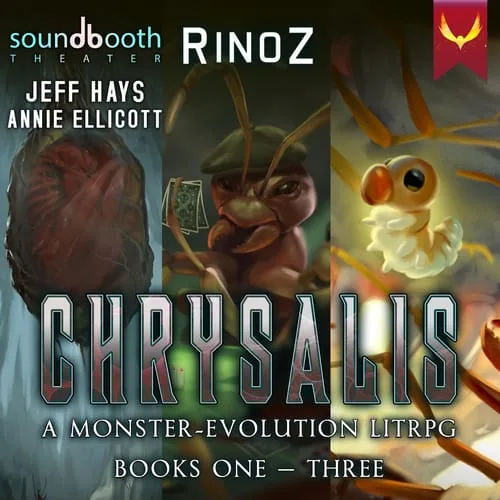
Chrysalis
by RinoZ
Jeff Hays
4.7 ⭐
17.3h
2.0K
Anthony dies human and respawns as an ant. Not a cool giant-monster ant, either — a regular dungeon ant who has to claw his way up the evolution tree mutation by mutation, core by core, on the world of Pangera. What starts as solo survival becomes something bigger: building a sentient colony, because the one thing an ant refuses to be is alone. Chrysalis pulled nearly 30 million views on Royal Road and it's easy to hear why. The humor lands, the evolution mechanics are catnip, and the colony-management layer is a whole base-building game most monster-MC books never touch. Downsides: the loop gets repetitive across a 17-hour book, and the tone reads younger than, say, Dungeon Crawler Carl. The Soundbooth production is the trump card — Jeff Hays with Annie Ellicott co-performing turns an ant's monologue into a full show. 2.0K ratings, 4.7, and easily the best ant-based audiobook you'll ever put in your ears.
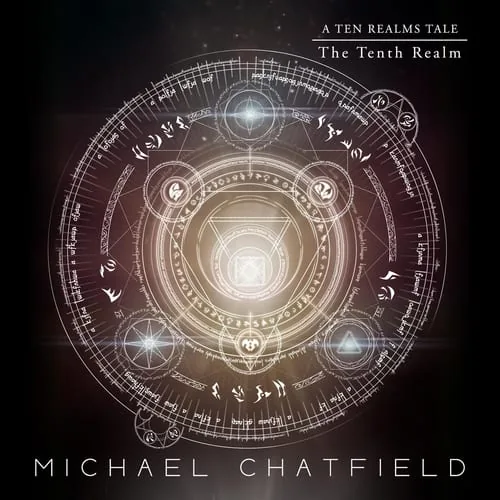
The Ten Realms
by Michael Chatfield
Neil Hellegers
4.7 ⭐
17h
2.0K
Erik West is an ex-Army combat medic; his best friend Rugrat is a Marine recon sniper. When the Ten Realms pulls them in, they do what competent veterans would actually do: assess, stabilize, fortify, and start crafting better gear than anyone around them. That's the series in a sentence — combat medicine meets smithing meets cultivation, climbing realm by realm while building a home community worth defending. The military-buddy dynamic is the heart of it: two guys who bicker like brothers and cover each other without needing to discuss it. Crafting-heads eat this series up; the alchemy and smithing systems have real depth, and watching their settlement compound across twelve books is its own reward. Honest note: later books balloon with side characters and the grind gets repetitive — reception cools as the series goes on, so ride the early momentum. Hellegers' baritone keeps the whole thing grounded. 2.0K ratings at 4.7 for book one.
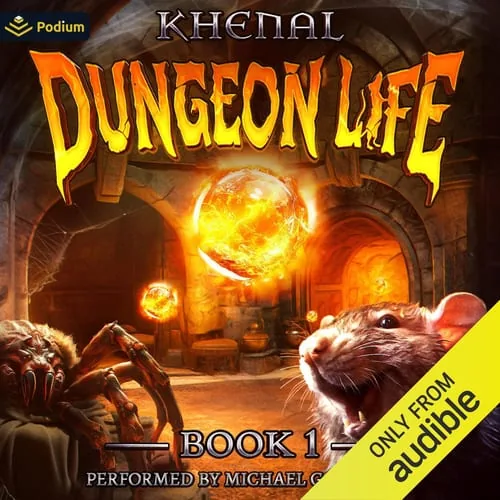
Dungeon Life
by Khenal
Michael Gallagher
4.7 ⭐
15h
1.7K
A guy loses an argument with a semitruck and respawns as a dungeon. Not a menacing one — a run-down old house that barely qualifies, on the edge of a town called Fourdock. He names himself Thedeim and immediately breaks the dungeon-core social contract: instead of luring adventurers to their deaths, he treats them like regulars at a neighborhood shop. Better loot, fair challenges, repeat customers. Dungeon Life is the wholesome end of dungeon core, and the ensemble is the engine — delvers, townsfolk, and dungeon denizens all get POV time, each likable in a different register. It's funny in a low-key way that sneaks up on you. The knock is structural: the multi-POV setup retells the same events from different angles, which starts to read as bloat once you notice it, and Thedeim's internal monologues loop. Fifteen hours still evaporated on me. Michael Gallagher's narration keeps it cozy without going soft. 1.7K ratings at 4.7, four books in.
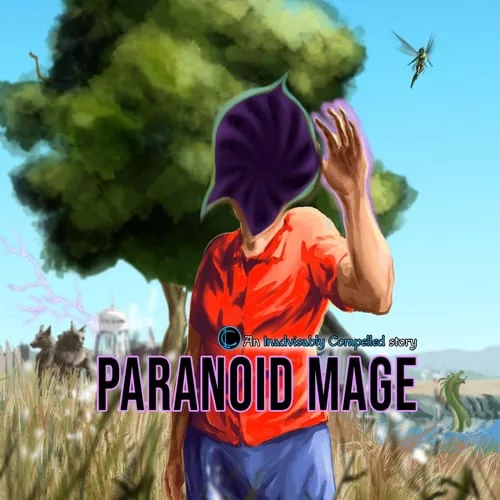
Paranoid Mage
by InadvisablyCompelled
Jeremy Frazier
4.7 ⭐
10.9h
805
Callum Wells spent thirty years quietly noticing the monsters walking around in human skin. Then the hidden magical world noticed him back — and its onboarding process involves a forced tattoo and lifetime conscription under GAR, the magical government. Callum's answer is no. The entire series is him opting out: going dark, ghosting every faction, and running a one-man evasion campaign on portal magic while the setting's heavyweights try to leash him. It's urban fantasy for everyone who ever read a masquerade setting and thought, why would anyone sign up for this? The cat-and-mouse stays tense throughout, and Callum solves problems like an engineer — measure, test, relocate. Fair criticism: the run-hide-repeat loop gets samey by design, and his refusal to trust literally anyone can read as stubbornness rather than caution. Jeremy Frazier narrates the audiobook. 4.7 from 805 ratings.
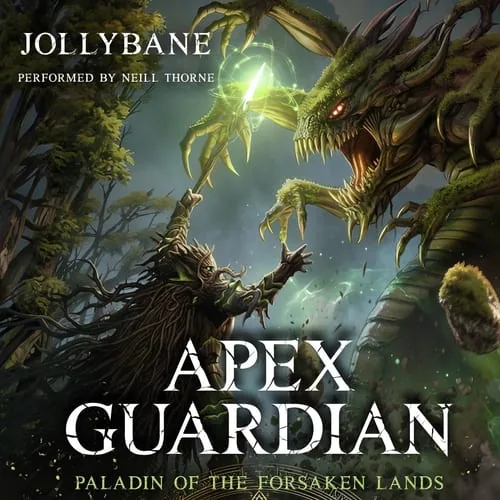
Apex Guardian
by Jollybane
Neill Thorne
4.8 ⭐
17.2h
119
Vrax grew up on the edge of the Nightmare Wood, where the trees have actual teeth. Everyone his age settled for a Common or Rare class. He held out, and it paid off in the bones of a long-forgotten nature god: a unique class called Paladin of the Cycle that lets him rework living things. A daisy named Sunshine becomes a man-eater. Another of his projects turns into a draconic apex predator that feeds on fear. For once you're the level designer instead of the guy farming mobs, and that pitch alone put it on my list. I haven't actually listened yet, so this pick is built on Audible data and early reviews, and both look great. It's sitting at 4.8 from 119 ratings since its August 2026 release, with Neill Thorne's performance at 4.9. Reviewers love the monster designs and the horror that keeps tipping into comedy, and Duchess keeps coming up as the favorite. A few say the opening chapters drag. One is tired of a cast where almost everybody is morally gray, and another called it a druid Doctor Moreau, which tbh makes me want it more. It runs 17 hours.
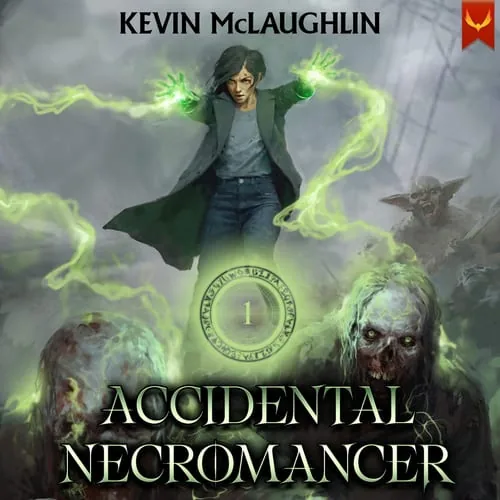
Accidental Necromancer
by Kevin McLaughlin
Erin Bateman
4.7 ⭐
12.3h
23
If you ever ran a minion build in Diablo, Accidental Necromancer is going to make sense to you fast. Selena Serrano is a first-year med student who was ready for exam stress, not the end of the world. Then a mysterious Event kills the power and brings magic back, and the cadavers in her Gross Anatomy class rise as zombies. The blurb calls it the Magipocalypse. Selena absorbs some black mana stones, becomes a necromancer more or less by accident, and starts raising an army to carve out a sanctuary in a city overrun by goblins, rat-men and giant spiders. Her roster runs from skeleton warriors up to a fireball-spitting T-Rex skeleton named Sue. I'm going off the numbers here, not my own ears: 4.7 from 23 Audible ratings, and one reviewer calls Erin Bateman's narration terrific. Listeners like Selena as a smart, sassy lead and see a lot of room in the magic system. A reviewer who still enjoyed it points out the survival-camp structure is familiar if you've done a few system apocalypses. About 12 hours, so it won't eat your month. Book 2 is on Kindle preorder for December 16, and there's no audiobook date yet.
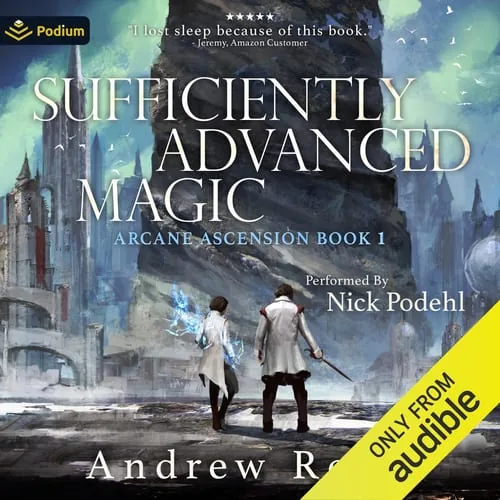
Sufficiently Advanced Magic
by Andrew Rowe
Nick Podehl
4.6 ⭐
22h
35.3K
Corin Cadence climbs the Serpent Spire for two reasons: earn an attunement — the mark that grants magic — and find out what happened to his brother Tristan, who walked into the tower five years ago and never came out. He comes back down with the rare Enchanter attunement and a spot at Lorian Heights academy, where the real game begins. Andrew Rowe's magic system is the star here: attunements, mana types, and enchanting rules detailed enough to theorycraft against, written for people who pause audiobooks to check the math. Corin is analytical to a fault, and methodical experimentation is the plot engine. Which brings the real gripe: Rowe info-dumps, and pacing pays the bill. If you want character-first storytelling, look elsewhere; if you want the hardest magic system in audio, this is it — 35.3K ratings at 4.6 make it one of the most-listened progression books ever. Podehl keeps the lecture-adjacent stretches lively, and Rowe himself has raved about the performance.
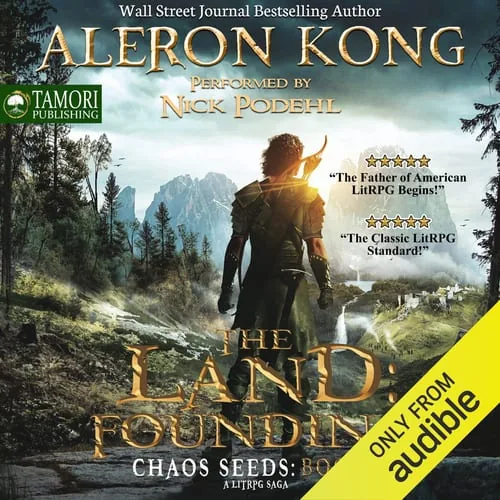
The Land: Founding
by Aleron Kong
Nick Podehl
4.6 ⭐
9.8h
34.1K
Richter gets pulled into The Land, claims a mist-shrouded village, and starts building: walls, workshops, alliances, an economy — with his sprite companion Sion along as the voice of local knowledge. The Land: Founding is the settlement-building LitRPG that half the subgenre descends from, and the loop is legitimately addictive; reviewers use the word devoured a lot, sometimes while complaining about themselves for it. Because here's the thing: the prose is weak, the leveling math doesn't always add up, and Aleron Kong's self-appointed Father of American LitRPG branding rubs people wrong. None of it matters once the village hooks you. This is popcorn in audiobook form — you keep hitting next chapter because number-goes-up plus town-grows is a psychologically unfair combination. Nick Podehl does his reliable thing and elevates every scene he's given. 34.1K ratings at 4.6, and a piece of genre history whether or not it's high literature. It isn't. Listen anyway.
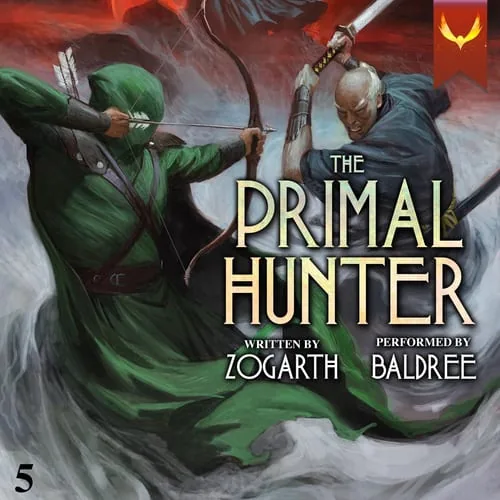
The Primal Hunter
by Zogarth
Travis Baldree
4.6 ⭐
20h
13.8K
Jake Thayne is an introverted office drone whose one hobby is archery — right up until Earth gets integrated into the multiverse System and his entire department is dumped into a tutorial forest. Turns out Jake carries a rare Bloodline that grants predator instincts and (the real cheat code) lets him deal with gods as equals. That's how he ends up befriending Villy — the Malefic Viper, an ancient snake god who mentors him in alchemy, trash-talks the rest of the pantheon, and quietly becomes the best character in the series. The Jake/Villy dynamic is the heart of the thing; around it is shameless battle-junkie power fantasy about a guy finally honest enough to admit he loves the fight. Known issues: stat-block bloat, mid-series wheel-spinning, and Villy bailing Jake out one too many times. Still: 13.8K ratings at 4.6, fifteen audiobooks in the numbered run, and Book 15 is out now. Baldree's Villy voice alone justifies going audio. It's big dumb numbers and I love it.
Awaken Online
by Travis Bagwell
David Stifel
4.6 ⭐
16h
12.1K
The game takes one look at Jason's psych profile and decides he'd make a better villain than hero. That's the hook of Awaken Online: the VRMMO's controlling AI reads players' mental states, and Jason — freshly expelled thanks to his rich-kid rival Alex — gets nudged straight down the necromancer path. Undead armies, a seized city, a throne. What makes it work is that the dark alignment feels earned instead of edgy; Jason plans like a raid leader and enjoys his own theatrics, and you end up rooting for the bad guy without noticing the switch. Weak spot: Alex is a cartoon. Rich, smug, evil because the plot needs him to be — comic-book villains have more depth. The Twilight Throne arc is satisfying enough that you forgive it. David Stifel's narration layers in actual sound effects, which threw me for an hour and then became my favorite part of the production. 12.1K ratings at 4.6, and it's been a genre cornerstone since 2016.
Noobtown
by Ryan Rimmel
Johnathan McClain
4.6 ⭐
9.1h
9.6K
Jim dies, reincarnates into a video-game world, and spawns in a newbie zone that's been abandoned for centuries — meaning nobody told the monsters to go easy on level-1 players. His only backup is Shart, a literal shoulder demon with exactly the sense of humor that name implies. Noobtown knows what it is: a comedy that happens to have levels, not the other way around. Jim's a likable everyman, the village-rebuilding gives each book a real arc, and every volume actually ends instead of cliffhanger-baiting you into the next one. Honest warning: if crude humor isn't your register, Shart will wear on you fast — people who bounce off this series bounce hard. Everyone else finds it stupidly funny: 4.6 across 9.6K ratings funny. Johnathan McClain's delivery is a huge part of that; his comic timing turns mid jokes into good ones and good ones into rewind-that-bit moments.
Viridian Gate Online: Cataclysm
by James A. Hunter
Armen Taylor
4.6 ⭐
9h
9.2K
Asteroid 213 Astraea will hit Earth in 2042, and Jack Mitchell — a burned-out EMT with no shot at a bunker ticket — takes the only exit on offer: full digitization into the VR world of Viridian Gate Online. The catch list is long. Upload before the deadline, and your body dies. Roughly one in six minds doesn't survive the transfer at all. And the digital afterlife you're buying into is already knee-deep in faction politics and open war. As Grim Jack, he starts scraping together allies among humanity's digital remnant. VGO is early-wave VR LitRPG with a real premise underneath — permanence changes the stakes completely, since you can't log out and nobody hand-waves a respawn. The knock: stretches read like a walkthrough, all menus and mechanics narration, which is very 2017 of it. Still one of the better-told entries of that era. Armen Taylor handles the big cast cleanly across eight books. 9.2K ratings at 4.6.
One More Last Time
by Eric Ugland
Neil Hellegers
4.6 ⭐
8h
5.7K
Montana is a huge, good-hearted screw-up at the literal end of his rope when his last remaining friend offers him an exit: iNcarn8, a game marketed as a whole new life. He takes it — and respawns as an even more enormous version of himself, promptly stumbling into a dukedom he has no idea how to run. One More Last Time is comedy-first LitRPG carried by Montana's lunkhead first-person voice: sincere, dumb in the lovable way, and surprisingly capable of landing an emotional beat between bar fights. The series stretches sixteen books, and the pacing is breezy to a fault — books one and two are really a single arc split down the middle, and the two-page character-sheet dumps repeat like a bad habit. In practice it barely matters. Hellegers is the secret sauce; reviewers describe him as Ray Porter mixed with Tom Hanks, and that's exactly the warmth this material needs. 5.7K ratings at 4.6.
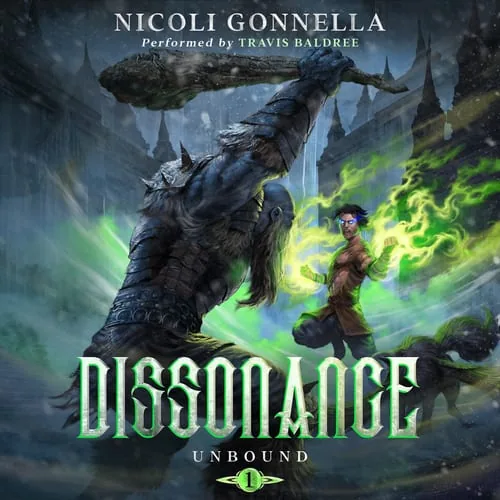
Unbound: Dissonance
by Nicoli Gonnella
Travis Baldree
4.6 ⭐
27h
5.3K
Felix Nevarre gets snatched off Earth moments before his death and dropped alone on the Continent — no tutorial, no starter town, just an enigmatic System and wildlife that regards him as protein. Unbound's opening act is pure solo-survival progression: Felix levels through stubbornness, learns by nearly dying, and slowly stacks the unusual Skills that make his build one of a kind. It's an addictive loop (nearly 9K Goodreads ratings for an indie debut is no accident), and Felix hits the sweet spot of strong without being insufferably overpowered, at least early. The bloat is real, though: fights run long, and the Gary Stu accusations from detractors aren't baseless by the later books. At 27 hours, you'll know by hour five whether the rhythm works for you. Baldree's narration is solid rather than showy here — he does the job and stays out of the story's way. 5.3K Audible ratings at 4.6, twelve books and counting.
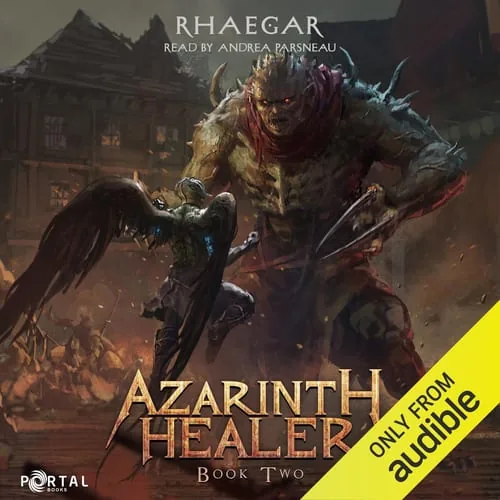
Azarinth Healer
by Rhaegar
Andrea Parsneau
4.6 ⭐
24.9h
5.1K
Ilea Spears is flipping burgers and kickboxing on weekends when she wakes up in the world of Elos and rolls the genre's best joke class: Azarinth Healer — an offensive healer who wins fights by punching things and out-regenerating whatever punches back. She likes fighting. She likes food. The story mostly gets out of her way. There's no world-ending quest here; Azarinth Healer is exploration-driven, low-angst, and unapologetically comfy, which is exactly why Royal Road made it huge. The flip side: with no big goal pulling things forward, some arcs drift, and plot-hungry listeners will feel the meander in the middle stretch. I stopped caring around hour ten, because hanging out with Ilea is the point. Andrea Parsneau won an Earphones Award and it shows — her Ilea is precisely as cheerful-while-committing-violence as the text demands. 25 hours in book one, 4.6 from 5.1K ratings.
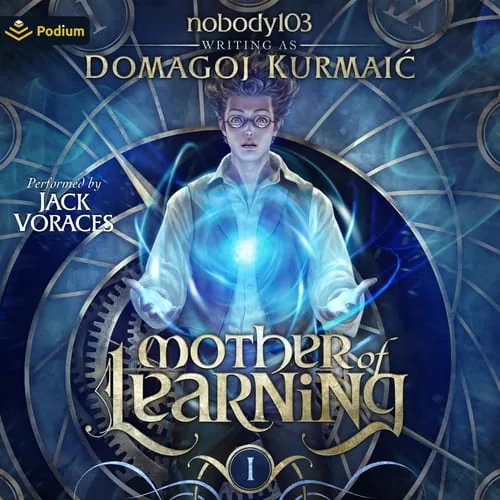
Mother of Learning
by Nobody103
Jack Voraces
4.6 ⭐
22.9h
3.8K
Zorian Kazinski, a prickly mage student, is murdered when an invasion hits the city of Cyoria during the summer festival — then wakes up a month earlier with his memories intact. Again. And again. Mother of Learning is the best time-loop story in progression fantasy, period: a month-long loop, a fellow looper named Zach, and a mystery where every thread actually pays off. Nobody103 plotted this thing like a watchmaker; details you shrug past in early cycles come back forty hours later as load-bearing revelations. Fair warning about the opening — Zorian starts deliberately unlikable and the first hours run dry, so listeners who bounce early never see the compounding. Push through; his growth from insufferable to genuinely good company is the real arc. Jack Voraces first recorded this as a free fan project before the official release, and his wry, precise delivery owns the material. Arc 1 is 23 hours and sits at 4.6 stars from about 3.8K Audible ratings. The full four-arc run is about 97, so pace yourself.
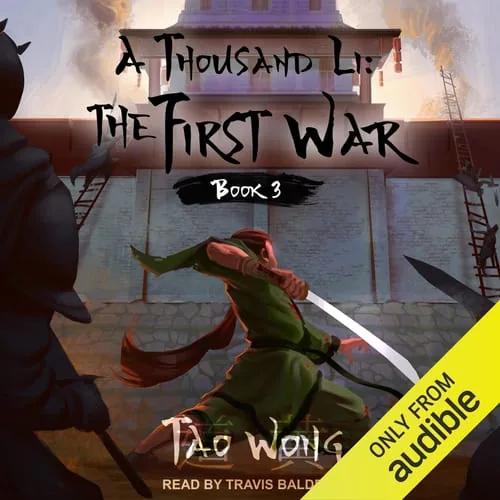
A Thousand Li: The First Step
by Tao Wong
Travis Baldree
4.6 ⭐
8.5h
3.4K
Long Wu Ying is a rice farmer's son conscripted for war in the state of Shen — until a chance encounter redirects him to the Verdant Green Waters Sect and the long, long climb toward immortality. A Thousand Li is deliberately traditional xianxia: sect politics, breakthrough stages, sword arts, all of it explained clearly enough that this works as a first cultivation book for Western listeners. Tao Wong grounds every stage and custom, and both Will Wight and Matt Dinniman have blurbed the series, which tells you the neighborhood it lives in. Be honest with yourself about pacing, though — this is a slow grind by design, and Wu Ying's personality doesn't extend far past diligent in book one. Reviews call the early books flat for exactly that reason. Baldree's narration is the multiplier; half the Cradle audience wandered over because of him, and he treats this material just as well. 4.6 from 3.4K ratings.
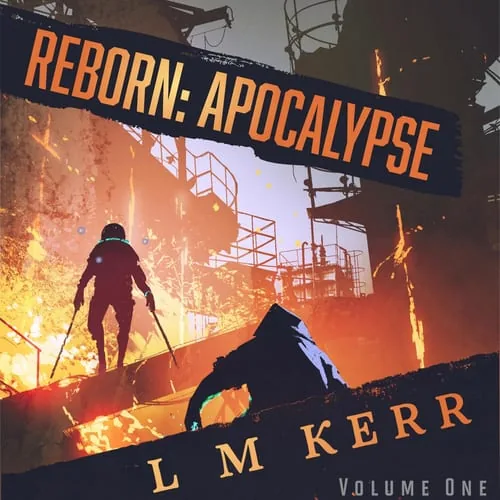
Reborn: Apocalypse
by L.M. Kerr
Adam Stubbs
4.6 ⭐
15h
3.1K
Humanity gets ripped out of reality and dumped into the Seven Layered Worlds: climb all seven and reach Heaven, or go extinct trying. Spoiler — they went extinct. Michael Care was there for the whole collapse, and not as some chosen one. He was a middling swordsman in Humanity's Last Army, the kind of guy who survives on caution while better fighters die around him. Then a chance artifact throws his memories back to day one, and round two begins. What hooked me is that Michael actually plays it like a gamer on a second playthrough with the wiki open. He knows which trials pay out, which choices doomed everyone, which people are worth saving this time. It's the Korean-style regressor formula wearing a LitRPG/wuxia skin, and Kerr commits to it hard. Adam Stubbs keeps the narration lean and urgent, which fits a story that's basically one long speedrun against fate. Fair warning: the prose shows its webnovel roots in places, and a few side characters are pure NPC. But I chewed through the 15-hour runtime in three sittings, and a 4.6 average from 3K listeners says I'm not alone. One of the better second-chance stories on Audible.
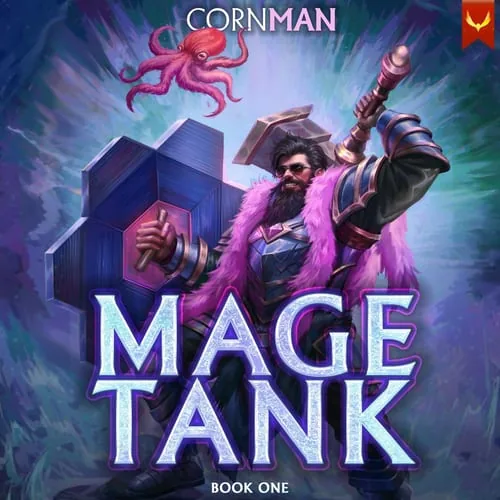
Mage Tank
by Cornman
Daniel Wisniewski
4.6 ⭐
20.5h
2.5K
Arlo dies via high-velocity tree hug — long story, dumb story, great story — and wakes up in a world where power comes from conquering ancient Delves. His welcome package: a maximum-difficulty Delve, no tutorial, no gear, and a party of strangers who all assume he's the trap. So he builds the thing the title promises: a tank who casts, soaking hits while breaking the local meta wide open. Big Dungeon Crawler Carl energy in the humor, but the comparison undersells how sharp the build theory is — Cornman writes crunchy mechanics with real trade-offs, and the world reveals itself through play instead of lore dumps. The weak spot shows once the first Delve ends: the outside world feels thin and underpopulated, like the server hasn't finished loading in. Daniel Wisniewski gets Arlo's dry sarcasm exactly right, letting absurd lines land deadpan instead of mugging for the mic. 2.5K ratings at 4.6 and climbing. One of 2025's best debuts.
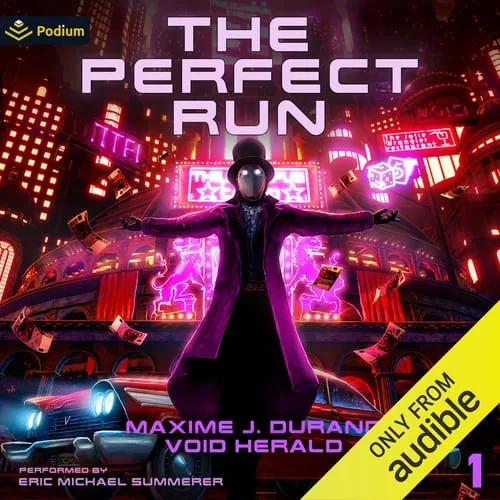
The Perfect Run
by Maxime J. Durand
Eric Michael Summerer
4.6 ⭐
18h
2.1K
Ryan Romano — street name Quicksave — can set a save point in time and reload it on death, plus stop time for ten seconds. He treats New Rome, the criminal capital of a rebuilding dystopian Europe, exactly like you'd treat a game with save-scumming enabled: die, laugh, reload, try the stupider option. The Deadpool-meets-Groundhog-Day pitch is accurate, but it undersells what the trilogy is actually doing — under the clowning is a man who's been alone with his power long enough to crack, and the emotional payload lands harder because of all the jokes that came before it. Some of the most memorable characters in the genre, and it's complete at three books with an ending that satisfies. Caveat: the nonstop bits undercut the early stakes, and it takes a few loops before the depth shows. Summerer splits listeners: some say he elevates the material, others call him merely competent. I'm in the elevate camp. 4.6 from 2.1K ratings.
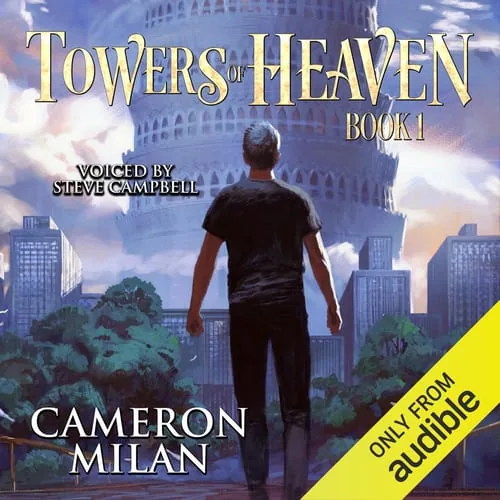
Towers of Heaven
by Cameron Milan
Steve Campbell
4.6 ⭐
7.5h
2.1K
Towers appear across Earth, humanity gets a leveling system and a fighting chance, and blows it — Jason is there at the end, watching the last of us lose. Then he's sent back to before the towers arrived, memories intact, with one directive: speedrun it right this time. Towers of Heaven is regression fantasy at its most efficient. At 7.5 hours, book one wastes nothing: Jason knows the tower layouts, knows which skills break the curve, knows who dies without him, and Cameron Milan just lets the future-knowledge power fantasy rip. It's the clear fan favorite of the trilogy, and I'd call that a warning label as much as praise — book two turns monotonous and book three feels rushed, to the point where one team member simply vanishes from the story. Grab it when you want a complete arc in a weekend; keep expectations calibrated for the sequels. Campbell gives every character and race a distinct voice and keeps the action moving. 4.6 from 2.1K ratings.
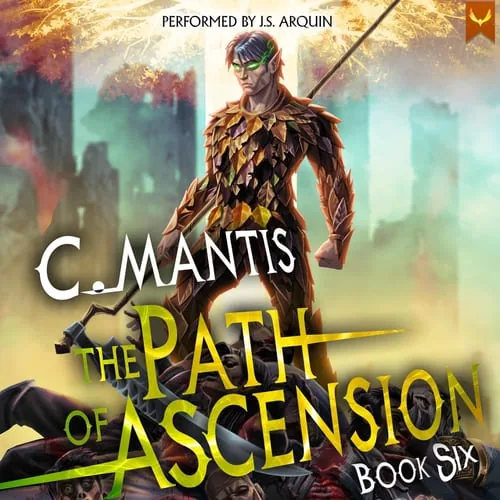
The Path of Ascension
by C. Mantis
J.S. Arquin
4.6 ⭐
24h
2.0K
Matt watched a rift break destroy his city and his parents, and grew up dreaming of delving rifts himself — right up until his awakening hands him a Talent rated detrimental and every guild in the city rejects him on the spot. Then a suspiciously high-tier couple offers him a slot on the Path of Ascension, the Empire's structured advancement pipeline, and the real story starts: rift after rift alongside Liz and Aster, climbing one of the best-designed power ladders in the genre. The Empire's tier system is the main attraction — clear rules, visible ceilings, and rewards that scale exactly the way your gamer brain wants them to. Bonus rarity: a central relationship that's actually healthy. The gripe is the loop; delves get formulaic, and the in-text skill-name callouts repeat until you could chant them from memory. J.S. Arquin reads it well, though those repeated skill announcements yank you out of tense scenes. 2K ratings at 4.6, twelve books deep and steady.
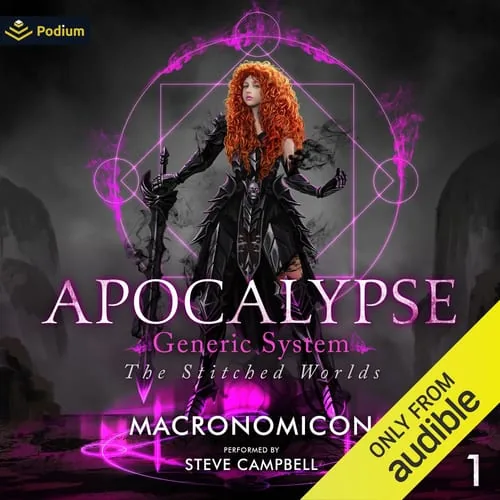
Apocalypse: Generic System
by Macronomicon
Steve Campbell
4.6 ⭐
11h
1.6K
Jeb Trapper is an Army vet at rock bottom — he's mid-trip in an underground PTSD drug trial when the System installs itself and politely asks him to select a tutorial difficulty. What follows is the most exploit-brained apocalypse in the genre: Jeb treats the deliberately generic System like shipped code that never got a QA pass, finding glitches, stacking loopholes, and leveling off jank the designers never intended. If you've ever duped items in a launch-week MMO, this book gets you. Macronomicon balances legitimately dark material with comedy that actually lands, and the supporting cast earns its screen time. The common gripe: the ending sequence feels rushed and takes some shine off an otherwise tight ride. Steve Campbell's deadpan system-notification delivery is half the comedy — the flatter he reads the boxes, the harder the jokes hit. 1.6K ratings at 4.6, and the arc wraps in four books.
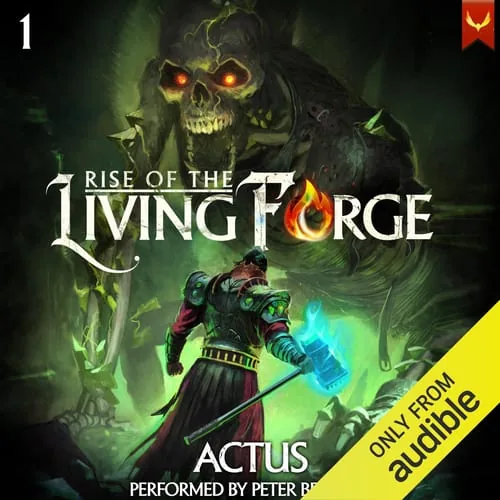
Rise of the Living Forge
by Actus
Peter Berkrot
4.6 ⭐
22.7h
1.5K
Arwin was summoned as a child, raised as a weapon, and lands the killing blow on the demon queen — at which point his own side decides the Hero is a loose end. He wakes a month after the betrayal with his class swapped for something unique: [The Living Forge], a blacksmith spec that grows by consuming magic items, stacked on top of the veteran titles nobody thought to revoke. It's less of a revenge arc than you'd expect, and better for it. Arwin opens a smithy, and the story becomes a found-family sim: the Menagerie, his oddball guild, anchored by Lillia's Devil's Den tavern next door. Actus balances crafting and combat well, and the momentum never stalls across 22.5 hours. One honest gripe from the smithing crowd: the actual craft is shallow — magic fills in where hammer technique should be, so don't expect Sanderson-grade forge detail. Berkrot is perfect casting for a story that lives in a workshop. I expected edgy; got comfy. 1.5K ratings at 4.6.
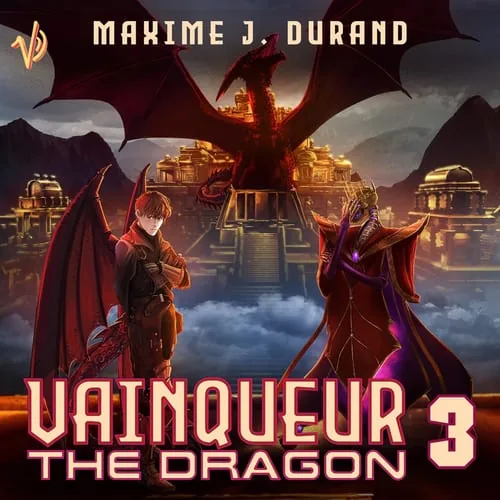
Vainqueur the Dragon
by Maxime J. Durand
Jack Voraces
4.6 ⭐
15h
1.4K
Vainqueur Knightsbane is a red dragon with a princess-kidnapping habit and a hoard he'd marry if he could. When a would-be thief named Victor Dalton — isekai'd human, professionally unlucky — explains that adventurers earn gold through quests and levels, Vainqueur has a revelation: monster-slaying pays. So the setting's apex predator registers as an adventurer, with Victor conscripted as his eternally exasperated minion-slash-HR-department. It's a full parody of LitRPG and isekai conventions, and the bit has legs because Durand commits: Vainqueur's ego is a force of nature that grows on you, while Victor's chapters keep one foot in an actual story with actual stakes. The humor runs juvenile and one-note in stretches — your tolerance for a dragon calling humans manlings for fifteen hours is the whole ballgame. Jack Voraces was born to voice this dragon, though the audio has a few spots where the voice filter drops between lines. Complete at four books. 4.6 from 1.4K ratings.
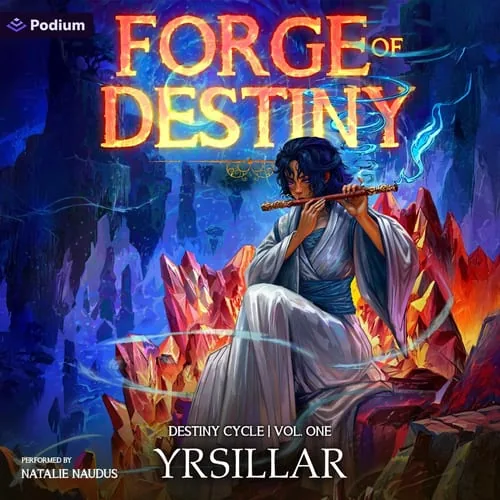
Forge of Destiny
by Yrsillar
Natalie Naudus
4.6 ⭐
18.7h
1.3K
Ling Qi is a fourteen-year-old street thief when the test says she has cultivation Talent, and the Argent Peak Sect takes her in — which sounds like a power fantasy setup and is actually a social one. Forge of Destiny is cultivation as boarding-school politics: alliances with noble disciples who could buy her home village twice over, face-saving rituals, and a progression path built on music, because Ling Qi cultivates through flute arts. Her spirit companion Sixiang — a muse fragment of the Dreaming Moon living in her dantian — doubles as social coach and guardian angel. It began as a quest serial on Sufficient Velocity, and that crowd-steered DNA shows in how much time it spends on relationships over fights. That's the pitch and the warning: this is slice-of-life xianxia, gorgeously built, deliberately slow. Action-first listeners bounce. Natalie Naudus makes the interior, meditative stretches genuinely gripping, and she doesn't stumble over a single xianxia term in 18.7 hours. 4.6 from 1.3K ratings.
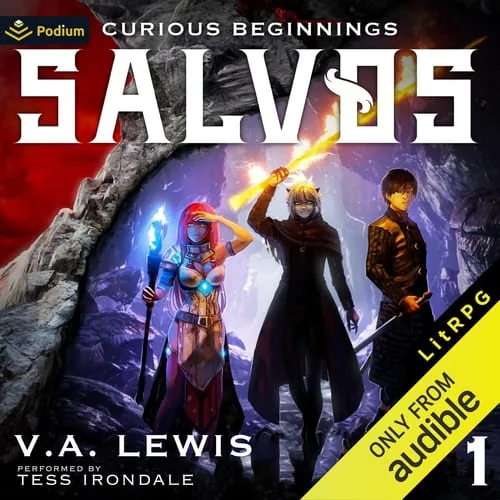
Salvos: Curious Beginnings
by V.A. Lewis
Tess Irondale
4.6 ⭐
11h
1.1K
Salvos is a newborn demon in the Netherworld with two defining traits: an evolution tree to climb and a pathological need to ask questions. She's curious about everything — kill counts, friendship, why other demons are so rude — and that chatty, guileless voice is what separates Salvos from every other monster-evolution story. Her first real bond is Haec, a fellow demon, and their odd little friendship gives the early survival arcs actual warmth. Under the hood it's a clean progression loop: levels, titles, evolutions, and each one changes how Salvos fights and how she thinks. The prose is simple — it started as a Royal Road serial and reads like one, which stands out more as the books get longer. The plot beneath the voice is fairly standard, too. But the voice is the product. Tess Irondale captures Salvos' manic energy so well the character feels engineered for audio. 11 hours, 4.6 from 1.1K ratings so far, fourteen books deep.
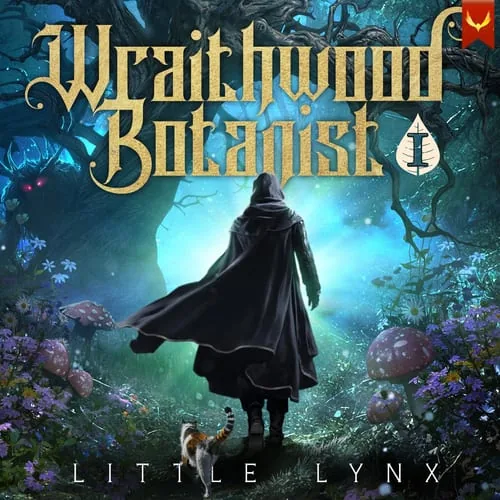
Wraithwood Botanist
by Little Lynx
Reba Buhr
4.6 ⭐
12.7h
629
Mira's home is destroyed by gods, and when the System grants her requests, she asks for a quiet forest and some plant magic. She gets monkey-pawed: the Wraithwood is a death trap where half the flora is poisonous, the rivers run with souls, and the local wildlife out-stats veteran adventurers. Her toolkit is botany. Wraithwood Botanist is smart-MC survival where the wins come from alchemy, preparation, and actually understanding the ecosystem instead of hitting it harder — closer to a puzzle game than a boss rush, and the progression feels earned because of it. Mira's growth curve is the standout; she levels as a person at the same rate as her herb garden. Two knocks: the mid-book grinding loops, and Lithco, the System companion who tags along, actively annoys a chunk of listeners. Reba Buhr narrates all four books with a steady hand. 4.6 from 629 ratings, and a quiet 2025 success story.
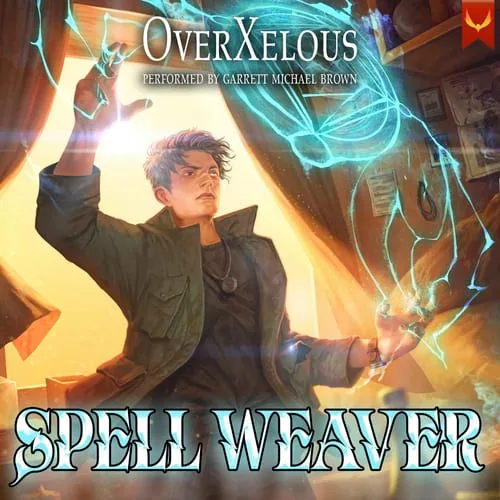
Spell Weaver
by OverXelous
Garrett Michael Brown
4.6 ⭐
19h
480
Alex is stuck in a dead-end job with an overbearing family when the System arrives, bringing magic, Rifts, and stat sheets — and his unique trait [Primordial Will] looks like a bug: every free point he earns locks into a single stat. No balanced builds, ever. It reads like a troll roll right up until Alex starts treating magic itself as the tech tree, reverse-engineering Mana Threads and building his own casting framework out of Spell Circles. This is theorycrafting-as-plot, the audiobook equivalent of an hour-long build-guide video you can't stop watching. The System-hits-Earth worldbuilding is fresher than most, and the slow-burn pacing gives each discovery room to breathe. Cons, honestly: Alex's voice occasionally lapses into stock gamer-bro, and later chapters drift toward a standard combat-progression loop. Garrett Michael Brown gives everyone a distinct, tellable voice and handles both halves of the cast equally well. 480 ratings at 4.6. If you build spreadsheets for fun, these 19 hours are pre-sold.
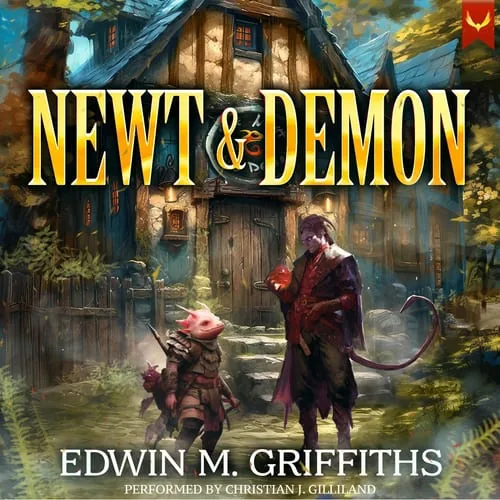
The Newt and Demon
by Edwin M. Griffiths
Christian J. Gilliland
4.6 ⭐
16h
327
Theo Spencer dies in Earth's apocalypse and gets an exit deal: reincarnation as an alchemist in Broken Tusk, a swampy nowhere town in a small kingdom's southern reaches — non-human body included. What follows is aggressively low-stakes in the best way: no demon lords, no countdown clocks, just a crunchy Alchemy system with real depth, a cast of charming townsfolk, and the slow, satisfying project of rebuilding a village economy one potion contract at a time. The Legends & Lattes comparisons are earned, but Griffiths' system is crunchier — this is cozy for people who still want stat sheets. Fair warning, and it's the same warning for all cozy LitRPG: the missing tension is both the feature and the dealbreaker, and some listeners DNF from sheer calm. This is my dishes-and-commute series; Broken Tusk started feeling like home about three hours in. Gilliland's easygoing read fits the material. 327 ratings at 4.6, two books and growing.
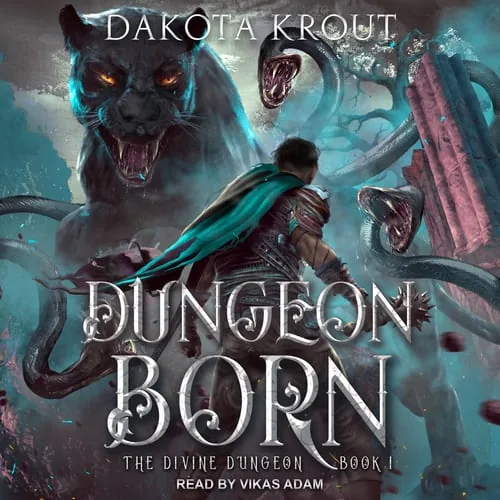
Dungeon Born
by Dakota Krout
Vikas Adam
4.5 ⭐
12.5h
17.0K
Cal used to be a person. Then he was murdered, his soul got sealed into a gem, and now he's a dungeon core under a mountain — growing rooms, spawning mobs, and tuning loot tables like a very literal live-service developer. His conscience-slash-mentor is Dani, a wisp with opinions; his favorite renewable resource is Dale, the shepherd who owns the surface land and keeps coming back to dive. Dungeon Born basically established dungeon core as an audio subgenre back in 2015, and the ecology of it — why dungeons exist, what they eat, how adventurers farm them — is thought out to a degree that still holds up. The knocks: characters run thin, Cal and Dani get petulant, and there's real game-mechanics padding between the good parts. Vikas Adam hard-carries — reviewers call it more like an audio play than a reading, and they're right. Five books, complete, 17.0K ratings at 4.5. A foundational text with a great performance stapled to it.
Cradle: Unsouled
by Will Wight
Travis Baldree
4.5 ⭐
8.9h
12.8K
Wei Shi Lindon is Unsouled — barred from his clan's sacred arts, officially a non-person in Sacred Valley — and everyone around him has made peace with him amounting to nothing. Then a cosmic Judge named Suriel pauses time mid-catastrophe, shows him a vision of what's coming for his home, and leaves him with an impossible mandate: get strong enough to matter. Unsouled is the front door to the twelve-book series that basically IS Western cultivation now, and the community mantra checks out — book one is the weakest entry, short and almost YA-flavored, and the standard advice is push through to book three, where the series shifts into a gear it never drops. Take the advice. Lindon's scheming-underdog arc alongside sword-disciple Yerin becomes the best sustained progression in the genre; it's complete, and the landing sticks. Baldree's narration is a huge reason Cradle owns audio. 12.8K ratings at 4.5, and the payoff compounds for eleven more books.
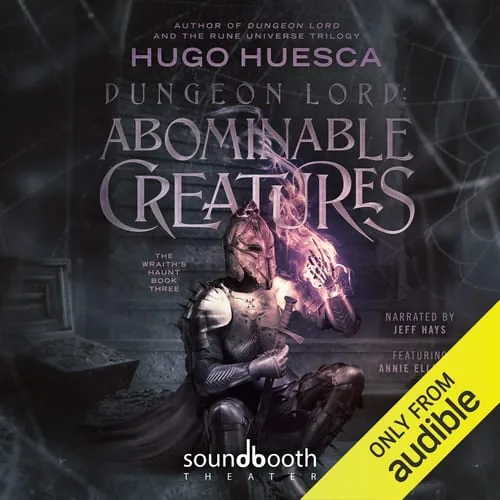
Dungeon Lord
by Hugo Huesca
Jeff Hays
4.5 ⭐
9.5h
7.3K
Ed Wright takes a deal with the dark god Murmur and wakes up in Ivalis as a Dungeon Lord — the setting's designated villain class, complete with dungeon, dark powers, and batblin minions. The twist is that Ed refuses the job description. He builds his dungeon like a decent man with a fortress: protecting the misfits who wind up depending on him, negotiating instead of monologuing, and only picking fights with people who deserve it. That good-man-in-an-evil-role tension is the series' engine, and Hugo Huesca plays it believably instead of cute. Heads up on structure: the opening is a slow burn, and the actual dungeon-lording takes a while to pay off — reviews knock the first-act pacing consistently. Worth the wait. The Soundbooth production, with Jeff Hays leading and Annie Ellicott voicing several of the women, is exceptional even by their standards. 7.3K ratings at 4.5, and weirdly absent when people list the genre's best dungeon books.
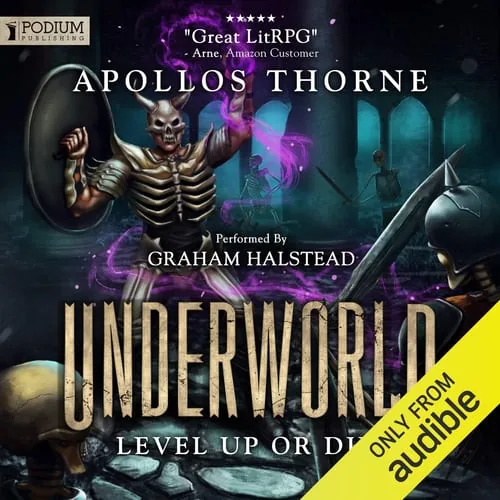
Underworld: Level Up or Die
by Apollos Thorne
Graham Halstead
4.5 ⭐
7h
6.8K
Elorion yanks off his VR headset and finds a monster in his room — a thousand-year-old succubus who, with a lich lord's help, kidnaps him and nineteen classmates to feed on their growth instead of their flesh. Dropped into the monster-filled Underworld, the schedule is right there in the title: level up or die. What makes this one work is the min-maxing. Elorion optimizes builds with the desperation of someone whose respawn screen is a coffin, and every point spent feels earned through grind rather than plot armor. Given the premise, it's also far less sleazy than you'd brace for — the succubus angle is threat, not titillation. Weak point: the system itself stays underexplained; spell tiers and item ranks are still vague by the end, which will bug the spreadsheet crowd. Graham Halstead's clean diction and pacing fit the material well. 6.8K ratings at 4.5, eight books, and a solid pick when you want real stakes with your stat screens.
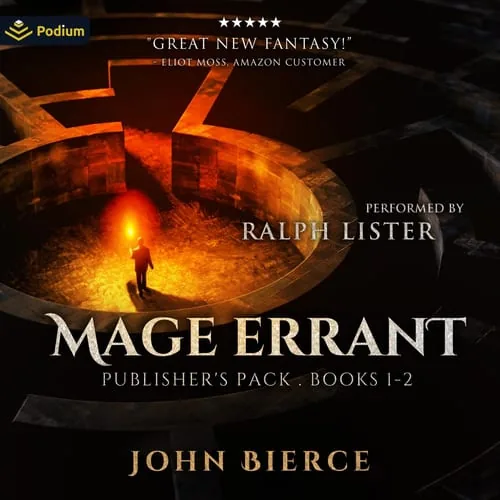
Mage Errant: Into the Labyrinth
by John Bierce
Ralph Lister
4.5 ⭐
7h
4.7K
Hugh of Emblin is Skyhold's designated failure — spells fizzle or explode, confidence at absolute zero, the academy equivalent of being perma-stuck in bronze rank. Then Alustin, a wandering librarian-mage, takes him as an apprentice and figures out what nobody else bothered to: Hugh's affinity was never weak, just unconventional. Crystal magic doesn't cast like fire. Add three fellow apprentices (Sabae, Talia, and Godrick) and you get the found-family academy story the genre keeps trying to write, with anxiety representation that reads like the author actually gets it. Book one is short and a little YA-simple; the series famously improves every volume, so treat these seven hours as the setup fee for a complete seven-book arc. One real caveat: Ralph Lister's narration divides listeners — solid male voices, but the women blur together and the teenagers sound middle-aged. 4.5 from 4.7K ratings, and Bierce's creative affinity system deserves the hype r/ProgressionFantasy gives it.
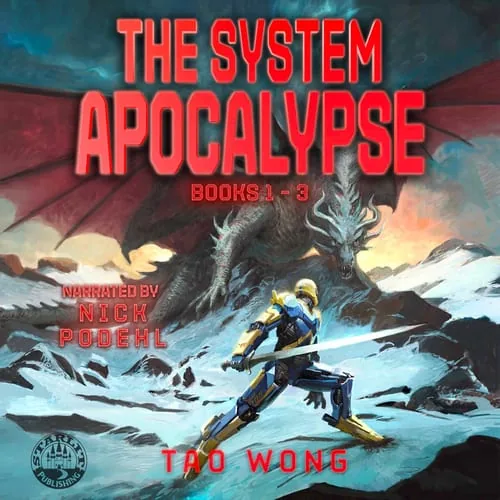
System Apocalypse
by Tao Wong
Nick Podehl
4.5 ⭐
9.8h
3.2K
John Lee is solo camping in Kluane National Park when the System arrives: blue status boxes, dead electronics, and a spawn zone rated for level 100+ wrapped around a guy who is decidedly level 1. First quest: survive the drive to Whitehorse. This is apocalypse LitRPG played grounded and mean — people die badly, trauma actually sticks, and the Yukon wilderness does a ton of atmospheric work. John picks up Ali, a properly sarcastic Spirit companion, and later builds Sabre, a bike that transforms into power armor, because Tao Wong has no fear about mixing mecha and dark elves into his monster apocalypse. It's divisive, though. John's flat affect and abrasive decision-making turn a chunk of listeners off, and reviews split harder than the 4.5 average suggests. But the series is complete at twelve books, and it helped define the subgenre. Nick Podehl elevates every chapter he reads.
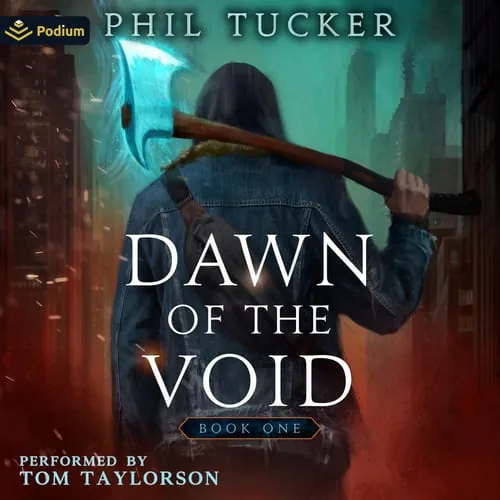
Dawn of the Void
by Phil Tucker
Tom Taylorson
4.5 ⭐
16h
590
James Kelly is a homeless widower and ex-EMT in Brooklyn when he starts leveling — days before the rest of the world learns that demons are real and the countdown to extinction has started. A survival video he records goes viral, and suddenly the guy sleeping rough is the reluctant face of humanity's resistance. Dawn of the Void is Phil Tucker doing apocalypse with the brakes cut: billions die, on the page, and the Nemesis waves keep escalating against an enemy that plays like a chess grandmaster rather than a mindless horde. What keeps it out of misery-porn territory is the character-first writing — James is a good man in an unraveling world, and hope keeps surfacing in the wreckage. Reviewers report inhaling 600 pages in a weekend, and the trilogy is complete, so there's no cliffhanger risk. Too grim for some listeners; that's fair. Tom Taylorson handles a big dynamic cast with distinct voices. 4.5 from a criminally small 590 ratings — this one's underexposed.
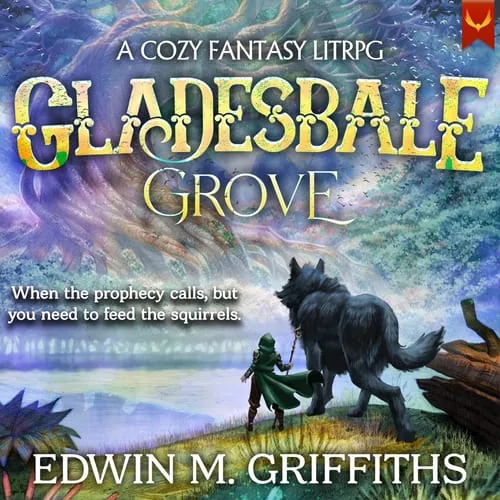
Gladesbale Grove
by Edwin M. Griffiths
Garrett Michael Brown
4.5 ⭐
16.5h
49
Shawn, corporate drone, is informed by a giant wolf spirit — presenting as a wolf-eared samurai, because psychopomps have style — that his soul is already spoken for. He wakes in a new body as Rud, caretaker of Gladesbale Grove, where his best friend is Ban, a sapient tree with strong opinions about proper grove management. It's from the author of The Newt and Demon, and it's the same formula transplanted to greener ground: base-building, nature magic, gentle wit, stakes that top out at whether the seedlings take. Griffiths has quietly become the reliable name in cozy LitRPG, and this one charms from the first chapter. The obvious caveat applies double here: there is functionally zero tension by design, and if you're plot-driven you'll drift away. With only 49 ratings so far, you're getting in on the ground floor — early listeners have it at 4.5. Garrett Michael Brown keeps the delivery warm and unhurried. Cozy LitRPG keeps eating well in 2026.
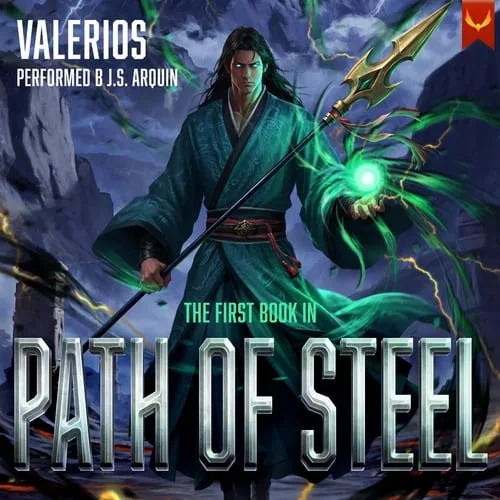
Path of Steel
by Valerios
J.S. Arquin
4.5 ⭐
35.8h
15
Gary is an above-average programmer stuck in a below-average life, and as a programmer I feel personally attacked. He finally gets a girlfriend and she explodes. Most of humanity goes with her, because an intergalactic outfit called the Network drafted Earth and purged everyone who isn't compatible with magic. Gary then chooses to walk into a forest full of alien horrors with nothing but a pencil. He's a spear fighter in a System with cultivation elements, and he's decided peace with the Network is off the table. Valerios wrote Road to Mastery, and that track record is why this is on the list one week after release. So no, I haven't heard it yet. The early numbers say 4.5 from just 15 Audible ratings, and J.S. Arquin is at 4.9 for performance, small sample and all. Reviews split on the humor. One fan says the cultivation-meets-LitRPG mix kept them listening nonstop. A 4-star review says it tries too hard to be Dungeon Crawler Carl, and a 3-star one complains that the blurb sells something grim while the book plays nearly everything as a joke. Also, it's 35.8 hours. That's a lot of Book 1.

The Wandering Inn
by pirateaba
Andrea Parsneau
4.4 ⭐
48.1h
14.5K
Erin Solstice wakes up on another continent, nearly gets eaten twice, and solves her survival problem in the least genre-standard way possible: she starts running an inn. Levels come from hospitality — an [Innkeeper] class, skills earned by cooking and keeping guests alive — while the deadlier side of Izril walks through her door: goblin chieftains, a skeleton employee named Toren, and the deeply weird ant-people called the Antinium. Ryoka, a classless courier who refuses the System on principle, carries the second POV. The Wandering Inn is the biggest story in the genre (the web serial out-lengths the entire Wheel of Time), and book one is a 48-hour listen that still lands a complete arc. Two legit gripes: characters cycle through emotional breakdowns, and the sprawl will test you. Parsneau's performance is the crown jewel of her catalog; she even gives the Antinium their own clicking cadence. 4.4 from 14.5K ratings.
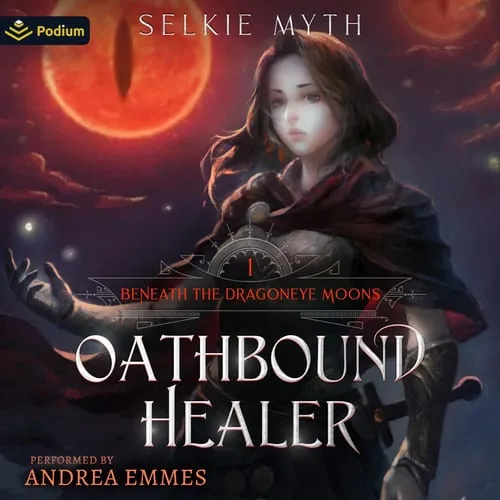
Beneath the Dragoneye Moons
by Selkie Myth
Andrea Emmes
4.4 ⭐
13.3h
878
Elaine is reborn on Pallos — a world with two moons, wild magic, and honest-to-god dinosaurs — inside Remus, a Roman-flavored empire where a woman's approved class options are [Housewife] or [Midwife]. She takes a third option: a [Healer] class bound by an oath to do no harm, and eventually a spot with the Rangers. A healer lead who can't murderhobo her way through problems forces genuinely different progression, and Elaine's chatty first-person voice carries the adventure. Full disclosure on the 4.4: book one is the rough one. The empire's sexism is written with a heavy hand, and Elaine makes some galaxy-brained impulsive calls — later books climb toward 4.7 as both she and the author level up. The series won a Stabby in 2021, runs 16 books, and Andrea Emmes stays remarkably consistent across the entire 230-plus-hour haul. If you want a healer MC done right, this is the flagship.
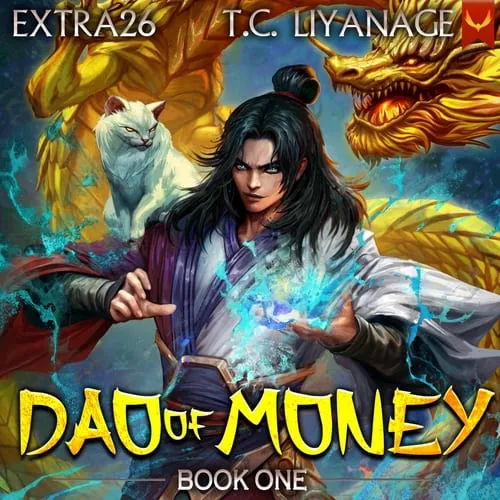
Dao of Money
by Extra26 & T.C. Liyanage
Peter Berkrot
4.4 ⭐
22h
118
Chen Ren reincarnates into a cultivation world with three problems: murderous sects, a body with negligible martial talent, and his predecessor's crushing debt. His solution ignores the genre playbook entirely — his cultivation is the Dao of Money, meaning his realm advances as his businesses profit. Yes: revenue growth as a breakthrough mechanic. He skips the sword arts and builds ventures instead, scheming his way up the wealth-and-power curve with a cat companion named Yalan along for the ride. Xianxia-meets-startup-grind sounds like a gimmick and plays like one of 2026's most fun premises; the business arcs stay genuinely interesting because Chen Ren wins through leverage and market positioning, not hidden bloodlines. The tournament arc overstays its welcome — that's the recurring gripe, and it's fair. Peter Berkrot's veteran character work gives the scheming real texture. 118 ratings at 4.4 so far, which mostly means you're early. Way more fun than it has any right to be.
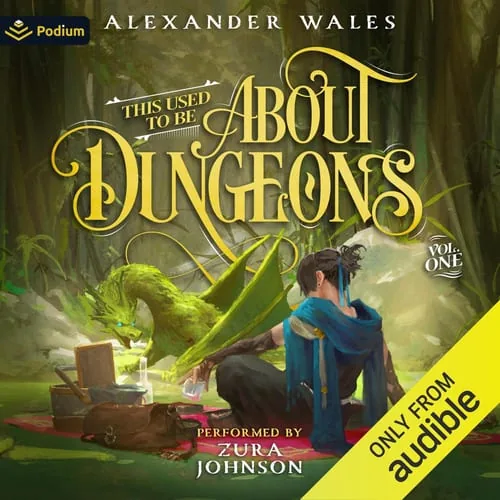
This Used to Be About Dungeons
by Alexander Wales
Zura Johnson
4.4 ⭐
23.5h
71
Alfric Overguard shows up in the sleepy village of Pucklechurch with a plan: assemble a dungeon-delving party. He gets one — Mizuki the sarcastic sorcerer who'd rather be cooking, Hannah the gregarious cleric, Isra the young druid, Verity the introverted bard — and then the story does exactly what the title warns: it stops being about dungeons. Delves happen, loot gets sold, but Alexander Wales spends the 23.5 hours on everything in between: meal prep, market days, friendship negotiations, finding your place. It's cozy without being saccharine, and the worldbuilding underneath the slice-of-life is quietly some of the smartest in the genre — a fantasy world where the systems actually make sense. If you need stakes, this will lose you by hour three; that's by design. If your favorite part of an RPG is the town between quests, few books get it this right. Zura Johnson handles the accents well, with the occasional character-voice slip. 4.4 from a tiny 71 ratings, basically undiscovered.
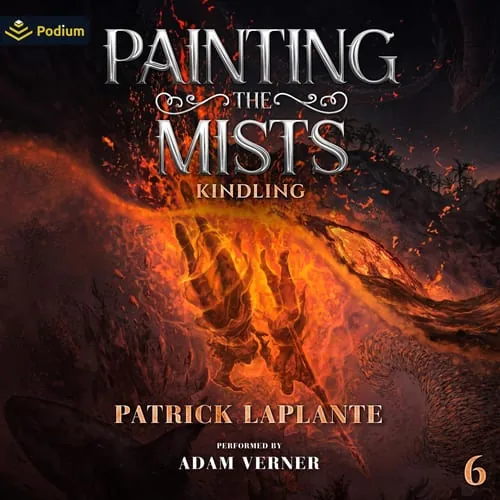
Painting the Mists: Clear Sky
by Patrick Laplante
Adam Verner
4.3 ⭐
10.5h
992
Cha Ming is grinding a corporate job and quietly losing the plot when a talisman brush older than time answers his what-else-is-there question by pulling him into a cultivation world. His path up is unusual for the genre: painting and calligraphy as magic, talismans as craft, the five elements as a toolkit — a scholar-artist's progression through a world of flying swords and sect rivalries. Painting the Mists is a marathon: eighteen volumes of slow-burn advancement and long character arcs, with setbacks that actually cost something. That's the appeal and the filter in one sentence. The 4.3 rating reflects patience-testing pacing and some uneven character work, not broken fundamentals — listeners who click with the rhythm tend to stay for the entire run. If what you want from cultivation novels is the quiet discipline rather than the tournament arcs, this is a deep well. Adam Verner's narration draws consistent five-star call-outs and becomes the series' voice. 992 ratings, and honestly flying under the radar.