The Building Blocks of LitRPG Worlds
LitRPG tropes get a bad rap sometimes. People look at the recurring elements (the stat screens, the leveling system, the dungeon crawling) and assume they're cheap shortcuts. But that's backwards. Every genre has its vocabulary. Mystery readers expect clues and red herrings. Space opera fans expect space battles and political intrigue. LitRPG listeners expect systems and progression because those elements are the entire point.
The genius of the genre is watching how different authors interpret these shared building blocks. Some use them straight, following the conventions readers expect. Others subvert them in clever ways. And the best authors do both simultaneously — they give you what you came for while also surprising you.
After tracking Royal Road rankings and Audible bestsellers, we've noticed a pattern: the books that resonate most with listeners aren't the ones that invent new tropes, but the ones that nail the execution of existing tropes while adding something unexpected. That's what separates Dungeon Crawler Carl from forgotten dungeon books. That's why Cradle's Lindon resonates despite following the "weak to strong" progression arc that hundreds of other series use.
Understanding these tropes makes you a better listener. You'll appreciate the craft more deeply. You'll recognize when an author is playing with expectations. And you'll find it easier to discover books that match your preferences, since so much of LitRPG can be understood through these core elements.
The System: The DNA of LitRPG Worlds
What is the single thing that defines LitRPG more than anything else? It's the System. The System is a game-like framework that governs how the world works — usually providing status screens with stats, experience points, quantifiable power metrics, and clear progression paths.
But systems vary wildly. Some are minimal — just levels, a handful of stats, and basic skills. Others are so complex that tracking them requires spreadsheets. Some systems are ancient, woven into the fabric of reality since the world's creation. Others are recent — suddenly imposed on the world by an external force (aliens establishing a game in Dungeon Crawler Carl, a mysterious "awakening" in Defiance of the Fall by TheFirstEra, or a mad god's experiment in He Who Fights with Monsters).
Some concrete examples of how different authors use this trope differently:
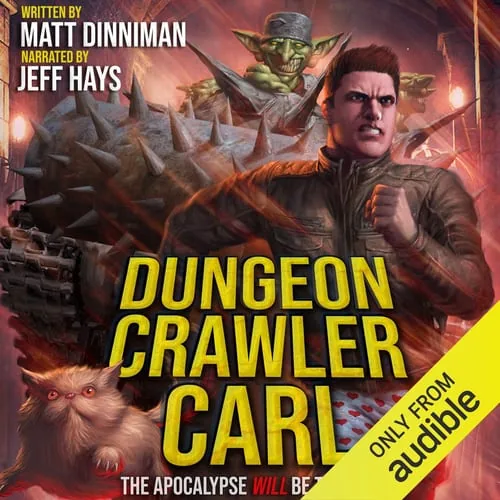
Dungeon Crawler Carl — The System here is ruthless and game-show-like. It's controlled by aliens who are literally watching Earth's survivors compete. Carl gets a dungeon card, monsters have specific stat blocks, loot drops follow game rules. The key detail: narrator Jeff Hays gives the System a comedic, cold voice that emphasizes how absurd the whole situation is. The System isn't mysterious or magical — it's mechanical, transparent, kind of ridiculous.
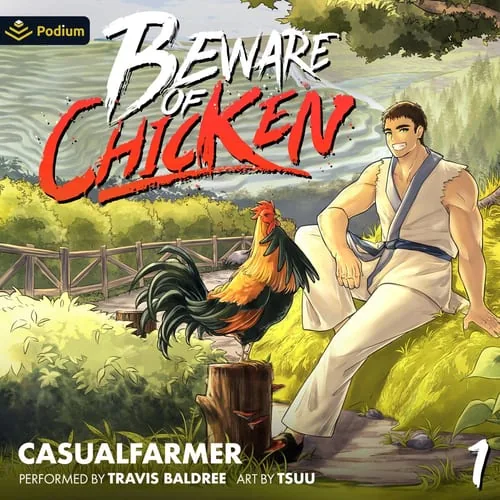
Beware of Chicken — Here's where an author subverts the trope brilliantly. The System exists, but the protagonist (Bi De, a rooster) largely ignores it. He doesn't obsess over stat allocation or optimal leveling. He focuses on farming, developing martial arts through practice, and building relationships. The narrative slowly reveals that the System is almost secondary to genuine hard work and virtue. The System is there, but it's not the story's heart.
Defiance of the Fall by TheFirstEra — This System is mysterious and actively evolving. The world has recently "awakened" with game mechanics, nobody fully understands why, and reality itself seems unstable. The protagonist and readers are discovering the System's rules together. Unlike Carl's transparent system, this one feels dangerous because the rules keep changing.
Cradle by Will Wight — The System here is incredibly detailed but treated almost like a martial arts manual. There are "sacred arts," cultivation paths, power levels, but they feel organic to the world rather than artificial. The system notation isn't about game mechanics — it's about personal mastery and spiritual advancement. Will Wight essentially takes the LitRPG system trope but grounds it in cultivation mythology.
Notice how each author uses the same core element — The System — but it creates completely different vibes? That's the art of LitRPG worldbuilding. The System is the infrastructure, but how the author deploys it determines the story's tone, pacing, and emotional resonance.
Stats, Skills & Classes: The Progression Engine
If the System is the infrastructure, then stats, skills, and classes are the engine that drives player (and reader) engagement. Let me break down each piece:
Stats — The quantified attributes. Strength, Agility, Intelligence, Wisdom, Constitution. Most LitRPG gives characters points to allocate on level-up. The listener experiences something visceral: they see the numbers go up and feel the character getting stronger.
Where it gets interesting: different series weight stats differently. In Dungeon Crawler Carl, Carl's stat allocation decisions have real tactical consequences. Choose wrong, and he literally dies. In Beware of Chicken, stat allocation barely comes up because the protagonist isn't trying to optimize combat. In Cradle, stats exist but are less important than technique and understanding. The same mechanic creates different story consequences depending on how the author emphasizes it.
Skills — Abilities that improve with use or investment. This is where progression fantasy and LitRPG really shine. A character might have a "Sword Mastery" skill that improves the more they swing a sword. Or "Fire Magic" that grows stronger with practice. Or utility skills like "Identify" (figure out what items do), "Cooking" (prepare better meals with buffs), or "Alchemy" (create potions and poisons).
The skill system satisfies a deep psychological need: the desire for things to improve through effort. When Lindon from Cradle practices his sacred art thousands of times and slowly feels himself getting better, that resonates because it mirrors real learning. When the protagonist of Dungeon Crawler Carl gains a new ability and immediately starts experimenting with how to use it, that's the dopamine hit of unlocking something in a video game.
People have strong preferences about skill progression. Some want to see hundreds of minor skills. Others prefer deep specialization in a few skills. Some want skills to feel earned through challenge. Others like skills that grow automatically through use. Understanding your preference helps you pick books.
Classes — The character role. Warrior, Mage, Rogue, Priest, Ranger. Many LitRPG worlds assign classes that determine available skills and growth paths. Class evolution — upgrading from a basic class ("Warrior") to a rare or unique class ("Blademaster" or "Sword Saint") — is often a major plot point that marks character growth.
And authors get creative with this. Dungeon Crawler Carl breaks class conventions — the main character is a Custodian, an unusual class that creates opportunities his friends don't have. He Who Fights with Monsters plays with Jason's inability to pick an optimal class path. Noobtown deliberately picks a weak class for comedy. Each author uses the class system differently.
In audiobook format, these mechanics shine. Top narrators like Jeff Hays use distinct voices for system notifications, stat increases, and skill unlocks. Travis Baldree in Beware of Chicken reads skill improvements with understated satisfaction. The narrator's delivery determines how thrilling these moments feel. A mediocre narrator can make stat allocation sound boring. A great narrator makes you feel genuine excitement when the protagonist gains a new skill.
Dungeons & Loot: The Story Structure
Dungeons aren't just locations in LitRPG — they're narrative structures. A dungeon is a contained environment with escalating challenges: easier enemies on earlier floors, progressively harder enemies as you descend, environmental hazards, puzzles, traps, and boss encounters. Complete it and you get loot, experience, and progression.
Why is this structure so effective? Because it creates built-in story momentum. The listener always knows what the goal is: reach the next floor. There's rising tension: enemies get harder. There are regular rewards: loot drops maintain motivation. It's a narrative rhythm that works.
How different books use this trope:
Dungeon Crawler Carl — Traditional dungeon structure but treated like a game show. Floors have themes, traps are comedically elaborate, and the dungeon itself becomes a character (it's controlled by aliens with a sense of entertainment value). The dungeon isn't just a location; it's the entire conceit of the series.
The Primal Hunter by Zogarth — Dungeons exist but the world is also open. Dungeons are clear progression markers but not the only way to gain power. This variation prevents the story from feeling repetitive — you can have dungeon arcs, but also open-world exploration, guild politics, or character development.
Dungeon Born by Dakota Krout — Here's a wild variation: the protagonist IS the dungeon. You're designing the layout, placing monsters, setting traps, creating loot drops. It's the dungeon trope inverted. Same core mechanic (dungeons with escalating challenges) but told from the dungeon's perspective instead of the adventurer's.
Defiance of the Fall — Uses dungeon-like areas (the abyss, tower trials) but mixes them with wilderness exploration and civilization. The dungeon is one tool for progression, not the only one.
The key insight: dungeons are incredibly flexible. They work as the entire story structure (Dungeon Crawler Carl) or as one element among many. They create natural progression beats and reward moments that listeners crave.
Isekai & Reincarnation: Fish Out of Water Stories
This confuses a lot of new LitRPG listeners, so worth clearing up. Isekai and LitRPG aren't the same thing. But they're buddies.
Isekai (Japanese term meaning "another world") — The protagonist is transported from Earth to a fantasy world. Why is this trope so common in LitRPG? Because it's brilliant audience setup. The character is learning the world's rules at the exact same pace as the reader/listener. When Jason from He Who Fights with Monsters first arrives in his new world, he's confused, overwhelmed, and asking the same questions we'd ask. He's our surrogate.
Reincarnation — The protagonist dies and is reborn in a new world, often retaining memories or knowledge from their previous life. This creates fascinating tension: the character has wisdom (they've lived before) but must rebuild power from scratch (they're an infant or newbie). Knowledge without ability.
How these play out differently:
He Who Fights with Monsters (Isekai) — Jason is yanked from Earth to a magical world. He speaks the wrong language initially. He has no idea how magic works. He's constantly wrong-footed. The isekai element is essential because Jason (and we) are learning the world together. His confusion is our confusion.
Legend of the Arch Magus by Michael Sisa (Reincarnation) — Raven was a powerful mage in his past life, dies, and is reborn in a new world. He has magical knowledge that most people lack. But he's a child with a child's body and limitations. The tension is watching him use his knowledge against opponents who don't expect it, while also having to rediscover the magic system in a different world.
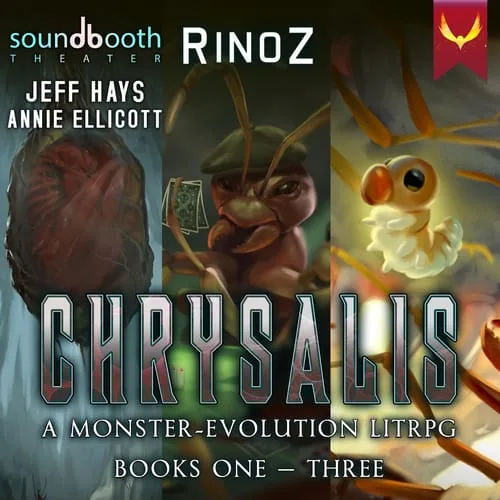
Chrysalis by RinoZ (Reincarnation, but weird) — The protagonist is reborn as an ant. She has human consciousness and memories of being human. She's discovering a dungeon from an ant's perspective. It's reincarnation but with the added layer of perspective inversion.
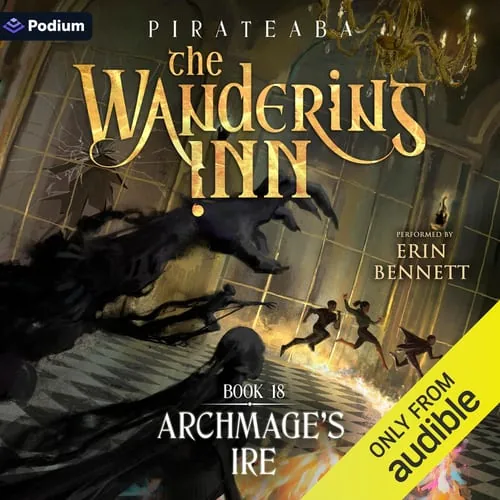
The Wandering Inn (sort of isekai) — A young woman suddenly finds herself in a game-like world. She's not sure how or why. Over time, the mystery of why people keep getting transported to this world drives much of the plot.
In our experience, preferences split fairly evenly: some love isekai's "learning together" dynamic. Others prefer reincarnation's tension of knowledge vs. ability. Neither is better — they scratch different itches.
Crafting, Base Building & Economy: Systems Beyond Combat
Not every LitRPG listener wants constant combat. Some prefer stories where crafting, building, and economics matter as much as leveling up. This is where the genre gets deliciously diverse.
Crafting — Characters create items: weapons, potions, enchantments, armor. Crafting progression follows the same satisfying curve as combat progression. Better recipes, rarer materials, new techniques unlocked through leveling or discovery. Why does this work? Because it mirrors real skill-building. Woodworking, cooking, writing — mastery feels earned.
In audiobook form, crafting can feel tedious if not handled well. A narrator droning through a list of ingredients feels boring. But Travis Baldree in Beware of Chicken reads crafting/farming moments with genuine care. Each step feels important. That difference between "this is filler" and "this is character development" comes down to narration and author writing.
Base Building — Constructing and upgrading a settlement, guild hall, or personal domain. The Land: Founding by Aleron Kong is the definitive base-building LitRPG. The protagonist claims a plot of land and gradually transforms it. Trees get harvested, buildings are constructed, defensive walls are built. There's a management sim element — resource allocation, worker management, expansion planning.
This appeals to specific listeners: people who love city builders, strategic thinking, long-term planning. These books tend to attract older audiences (30+) who appreciate the slower, strategic pacing.
Economy — Some LitRPG worlds have complex economies where crafting, trading, and resource management are central mechanics. Crafters need to optimize production. Traders navigate supply and demand. This appeals to listeners who enjoy economics, optimization problems, and the satisfaction of financial growth.
In Beware of Chicken, for example, the protagonist slowly builds a farm and reputation. He's not fighting dungeons; he's cultivating crops, raising animals, and building a community. The progression is economic and social, not combat-based. This variation of the LitRPG trope appeals to listeners who find pure combat repetitive.
Base-building and crafting series tend to have extremely loyal audiences. They're not massive bestsellers, but listeners stay with them through 10+ books because the progression is slower, more thoughtful, and the stakes feel more personal.
Power Fantasy vs. Underdog Stories: The Emotional Arc
LitRPG sits on a spectrum between two emotional experiences, and understanding where you fall on this spectrum determines which books will satisfy you.
Pure Power Fantasy — The protagonist gains power quickly and becomes increasingly overpowered. The appeal is experiencing unstoppable progression. You're not struggling; you're dominating. The Primal Hunter by Zogarth leans into power fantasy: Gunnar gets a rare class early and progresses faster than peers. The listening experience is satisfying in a particular way — you're experiencing what it feels like to be the chosen one, the prodigy, the person everyone underestimated who suddenly becomes unstoppable.
Power fantasies are perfect for certain moods. They're relaxing to listen to. There's less stress because you know the protagonist will solve problems through sheer power. They're wish-fulfillment in narrative form.
Underdog Stories — The protagonist starts weak and must earn every bit of progress. Cradle's Lindon is literally the weakest person in a world where everyone else has power. He's been told his entire life that he's powerless. The satisfaction comes from watching him slowly, painfully build himself up. It's not about the dopamine of winning; it's about the earned sense of achievement.
Underdog stories create different emotional intensity. You worry about the protagonist. You cheer harder at victories because they're rare and hard-won. The listening experience is more emotionally engaged but also more stressful.
The Middle Ground — Most successful LitRPG balances both. Dungeon Crawler Carl is neither pure power fantasy nor pure underdog story. Carl gains power but challenges always scale to keep him on edge. Victories feel hard-won even as he progresses. This is why Carl appeals to such a wide audience: you get the progression satisfaction (power fantasy) with the emotional investment (underdog stakes).
From reader feedback, we've found that listeners who prefer power fantasy tend to listen during commutes or gym sessions (they want something relaxing). Listeners who prefer underdog stories tend to do deep binge-listening (3-4 hours at a time), suggesting they want emotional immersion.
Neither is better. They serve different purposes. Understanding your preference helps you pick books that'll actually satisfy you. If you're looking for relaxation, power fantasy wins. If you're looking for emotional investment, underdog stories deliver.
The most rewatchable (re-listenable?) series hit this balance perfectly. Cradle progression slows enough that it creates tension but moves fast enough that you feel momentum. Dungeon Crawler Carl scales challenges to keep threats real even as Carl grows stronger. That balance is the hardest thing to execute, which is why books that nail it become beloved.
Frequently Asked Questions
What are the most common LitRPG tropes?
The core LitRPG tropes are: The System (game-like interface with stats and progression), stats and skills (quantified abilities that improve), classes (character roles with different abilities), dungeons (contained progression environments), isekai/reincarnation (transported or reborn into a new world), crafting and base-building (creating items and structures), guild systems (organized groups with ranks), and power scaling (how characters progress relative to challenges). Most LitRPG uses multiple tropes together.
What does isekai mean in LitRPG?
Isekai (Japanese: "another world") refers to stories where the protagonist is transported from Earth to a fantasy world with game mechanics. The isekai framing creates natural audience identification because both character and listener are learning the new world together. Examples include He Who Fights with Monsters (Jason transported from Australia) and Mark of the Fool (Jason transported from Earth, different character). It's common but not required in LitRPG.
What is a System in LitRPG?
The System is the fundamental framework governing a LitRPG world's mechanics. It provides characters with status screens showing stats, skills, levels, and experience points. Systems vary enormously: some are minimal (basic levels and stats), others are complex (hundreds of skills, crafting trees, hidden achievements). Some systems are ancient world-fabric; others are imposed by external forces (aliens, gods, sudden worldwide awakening). Understanding how an author uses the System determines the story's tone and pacing.
How do different authors handle the power fantasy vs. underdog spectrum?
Power fantasy books like The Primal Hunter have protagonists gain rare classes and progress quickly, creating relaxing wish-fulfillment experiences. Underdog stories like Cradle start the protagonist weak and force earned progression, creating emotional investment. Most successful series (Dungeon Crawler Carl, Defiance of the Fall) balance both—protagonists gain power but face scaling challenges that keep stakes real. Your preference determines which books will satisfy you.
What's the difference between reincarnation and isekai LitRPG?
Isekai: protagonist transported from Earth to another world, learning new rules alongside the reader. Reincarnation: protagonist dies and is reborn with memories but must rebuild power. Isekai creates "learning together" dynamics (perfect for audience identification). Reincarnation creates tension between knowledge (they remember magic) and limitation (they're a child/newbie). Both are popular but serve different emotional purposes.
Why do some LitRPG focus on crafting and base-building instead of combat?
Crafting and base-building LitRPG appeal to listeners who enjoy optimization, strategy, and slower character growth. Series like Beware of Chicken and The Land prove that combat-free progression satisfies many listeners. These books typically have loyal, long-term audiences and appeal to older listeners who prefer thoughtful pacing. They're niche but deeply beloved, proving that LitRPG's appeal goes far beyond dungeon-crawling and combat-focused progression.
Data Sources: Ratings, review counts, and audiobook lengths cited in this guide are sourced from Audible, Goodreads, and Royal Road as of April 2026. These figures may change over time as new reviews are submitted.
How We Review: Our recommendations are based on a weighted methodology covering narration quality, progression system design, story quality, and community reception. Read our full methodology
Affiliate Disclosure: This guide contains affiliate links to Audible and Amazon. As an Amazon Associates participant, we earn from qualifying purchases at no extra cost to you. Affiliate relationships do not influence our ratings or recommendations. Learn more